
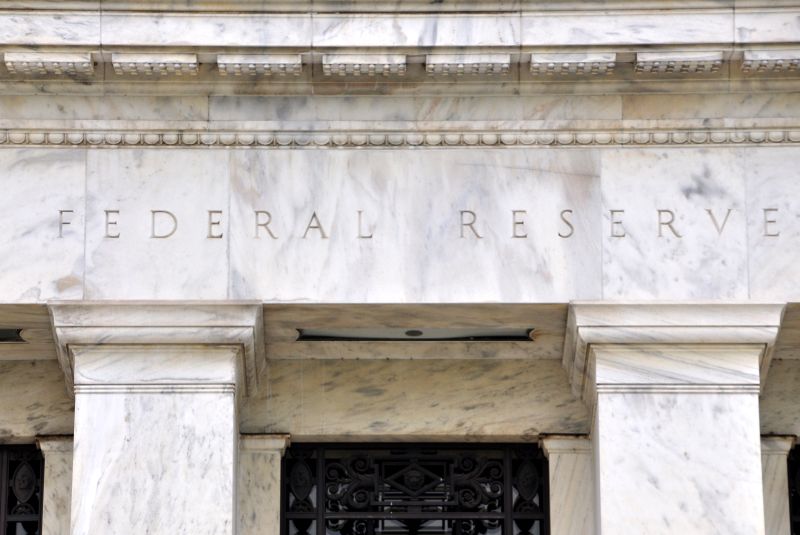
The latest proposals from U.S. banking regulators are expected to result in lower capital requirements for U.S. banks, which would be a negative from a credit rating perspective, says Moody’s Ratings.
Last week, the U.S. Federal Reserve Board released a series of regulatory proposals that would modify the risk-based capital demands on banks — including a revised edition of the Basel III requirements for large, international banks, changes to the capital surcharge for the biggest, global systemically important banks (G-SIBs), and revised requirements for all banks under the “standardized approach” in the capital rules.
If the proposals are adopted, they would reduce banks’ capital requirements overall — which Moody’s said would be “a credit negative in our view.”
For instance, the revisions to the G-SIBs’ capital buffers, coupled with the final Basel III regime, will decrease the overall capital demands on the largest banks. The changes to the standardized approach will also result in lower regulatory capital requirements overall.
“The existing capital framework has led to significantly higher capital levels since its initial implementation in 2013, a credit positive,” the rating agency said in a report. “If the three proposals lead to lower overall U.S bank regulatory capital, they will be credit negative.”
Moody’s noted, however, that the impact “will likely vary significantly by bank” due to differences in business models and the construction of the banks’ balance sheets.
Additionally, while the proposals are designed to align U.S. banks’ capital rules with global standards, improving global comparability between banks, “the changes could complicate capital comparisons between the largest U.S. banks and all other domestic U.S. banks,” Moody’s said.