
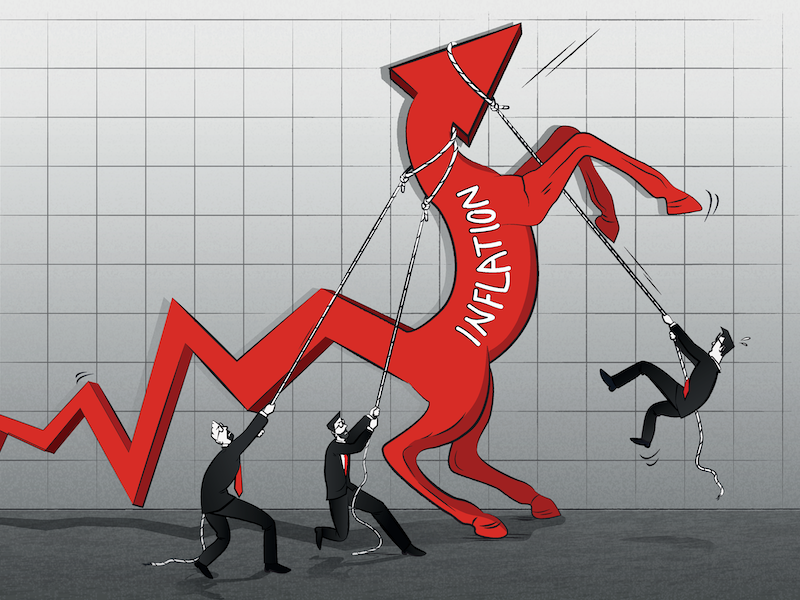
Inflation took off during the pandemic, and the composition of price pressures has changed in the years since, according to a new research note from the U.S. Federal Reserve Board — which suggests that strong wage growth, particularly in services, may be the culprit.
In their paper, Fed researchers report that, while headline inflation in Canada, the U.S., the U.K. and Europe, has declined from its recent peak in 2021-2022, prices remain elevated relative to the years before the pandemic — and they attempt to determine whether that reflects a temporary, or more fundamental change.
The research finds that, across all four economies, the number of price index components with annual inflation rates running above 3% has increased since the pandemic — indicating that inflation is now more widespread than it was in the years before 2020.
At the same time, components that are undergoing deflation have become less common, it noted, meaning there’s less drag on inflation from these components.
This same pattern is evident for both headline inflation measures and core inflation metrics, the paper noted.
“This result suggests that inflation has shifted away from being persistently somewhat below target that was characteristic of the pre-pandemic period,” it said.
And, the fact that inflation is more widespread, “could suggest a shift in structural drivers of inflation in the post-pandemic period rather than temporary or sector-specific shocks.”
Breaking down core inflation into goods, housing services and non-housing services “reveals that the most widespread price increases are concentrated in non-housing services” across all four economies, the paper said.
“This pattern suggests that inflation pressures could reflect sustained wage growth, as wage growth is more germane to non-services inflation,” it noted.
Indeed, the research also examines wage growth across the U.S. and Canada, and finds that “a substantial share of industries are experiencing above-3% wage growth, with services particularly affected.”
And, for both the U.S. and Canada, “wage growth remains elevated relative to pre-pandemic norms,” it found.
“Taken together, the diffusion indexes for both prices and wages suggest inflation is no longer just about temporary shocks to goods or housing,” the paper concludes.
“Instead, broad-based wage growth (particularly in services) contributes to persistent price pressures, signaling a possible evolution of the inflation process compared to pre-pandemic era,” it said.