
Amid tariff turmoil, Canada’s economy narrowly avoided a recession in 2025 — but it could yet face that fate if the existing North American trade deal runs aground this year, cautions BMO Capital Markets.
In a report Tuesday, the bank’s economists said real GDP growth slowed to 1.7% last year and “likely skirted a recession,” as growing compliance with the USMCA avoided the worst tariff impacts, fiscal and monetary policy supported growth, and equity markets rose strongly.
However, the average annual GDP reading “likely understates the true deceleration in activity,” it said, adding that GDP was likely up just 0.8% in the fourth quarter on a year-over-year basis.
Looking ahead, BMO is forecasting that growth will hold up — with 1.8% average growth expected in 2026 — however, that assumes relative stability in trade policy.
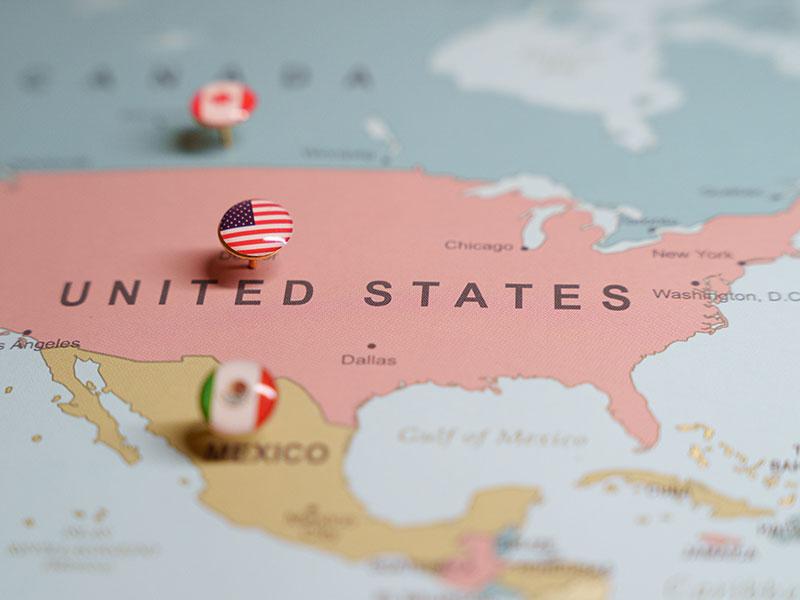
“Our critical assumption for 2026 is that the USMCA review will extend past this year, keeping the U.S. in the agreement and preserving the compliance exemption on most Canadian goods,” the report said.
However, it cautioned that the risk of recession may resurface if the trade deal falls apart.
“The main risk to Canada’s economy stems from its tenuous relationship with its largest trade partner,” the report said.
While ongoing policy uncertainty could weigh on business confidence and investment, “The impact of a USMCA breakdown would be far worse, potentially boosting the average tariff rate and triggering a moderate recession in Canada, even with significant policy support,” the report said.
On the fiscal front, stimulative policies “at both the federal and provincial levels should continue to cushion current tariff effects in 2026,” BMO said.
In terms of monetary policy, rates are already at the “low end of neutral,” the report said, so it’s not expecting further rate cuts.
“Still, given ongoing trade-policy risks, we suspect the [Bank of Canada] is more open to cutting than hiking should push come to shove,” it said.