
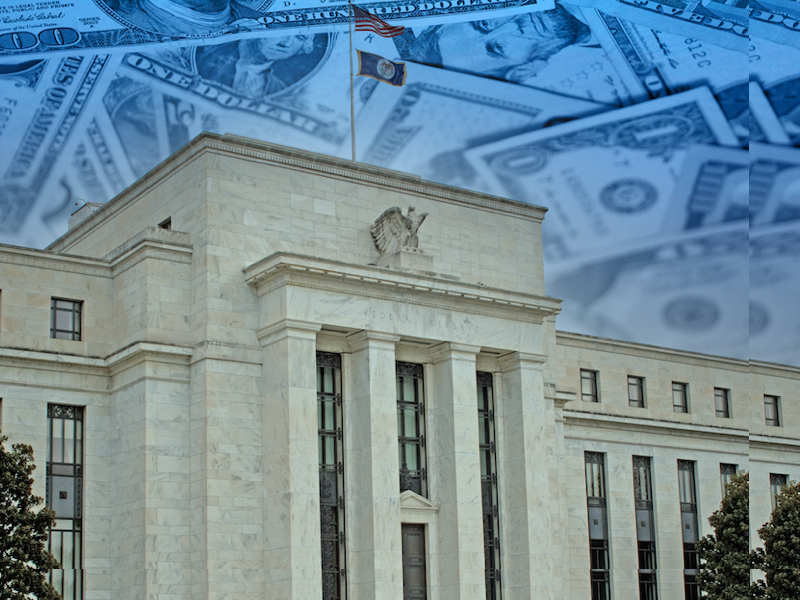
U.S. bank regulators issued final rules that will ease certain aspects of the capital requirements and leverage standards — over the objection of a couple of Fed governors.
In a joint release, the U.S. Federal Reserve, the Federal Deposit Insurance Corp., and the Office of the Comptroller of the Currency (OCC) issued a final rule that, the agencies said, aims to revise the capital rules to “reduce disincentives… to engage in lower-risk activities, such as intermediating in U.S. Treasury markets.”
Additionally, the rule modifies the leverage requirements for the largest, global systemically-important banks (GSIBs), which also aims to facilitate banks engaging in these activities.
The U.S. Securities Industry and Financial Markets Association (SIFMA) endorsed the reform. It said the revisions will restore the rule “to its proper role as a backstop to risk-based capital requirements and mitigating limitations on the ability of banking organizations to intermediate in U.S. Treasury markets.”
“This is particularly pressing given the impending industry move to mandatory clearing for U.S. Treasuries,” said Kenneth Bentsen, Jr., president and CEO of SIFMA, in a statement.
However, a couple of Fed governors expressed objections to the new rule.
In a statement, Fed governor Lisa Cook declined to support the rule, saying that it will lead to an “economically significant reduction in the amount of capital” that the subsidiaries of the large banks have to hold.
She said that regulatory staff project that the final rule would reduce aggregate tier 1 capital requirements for large bank subsidiaries by 28%, and called for regulators to “carefully consider the implications of capital flowing out of GSIB bank subsidiaries…”
“I am concerned that today’s actions represent a material change to bank-level capital requirements that are a core safeguard against vulnerabilities at the largest and most complex banking institutions,” she added.
These concerns were echoed by governor Michael Barr, who also cited concerns about reducing bank capital requirements, and said that he was “skeptical that it will achieve the stated objective of improving the resiliency of the Treasury market.”
“The final rule is particularly unlikely to help in times of stress. If banks use up their excess capital in normal times, there will not be excess capital in stressful times. Moreover, firms’ internal stress models measuring value at risk will likely limit Treasury intermediation when volatility increases, as they have in the past,” he said.
“In short, firms will likely use the rule to distribute capital to shareholders and engage in the highest return activities available to them, rather than to meaningfully increase Treasury intermediation,” he added.
Additionally, Barr said that the reforms make the capital rules more complex and opaque, and that it tilts the competitive landscape in favour of the large, systemically-important banks at the expense of smaller, regional banks.
“The rule weakens the resilience of the largest banks, depleting their loss-absorbing cushions of capital, without a clear offsetting benefit,” he said.