



Transcript: Fed heads into next meeting light on data, long on caution
Brandywine Global’s Siena Sheldon says with key jobs and inflation data delayed, policymakers are proceeding carefully as they weigh their next move
- Featuring: Siena Sheldon
- November 25, 2025 November 25, 2025
- 13:01
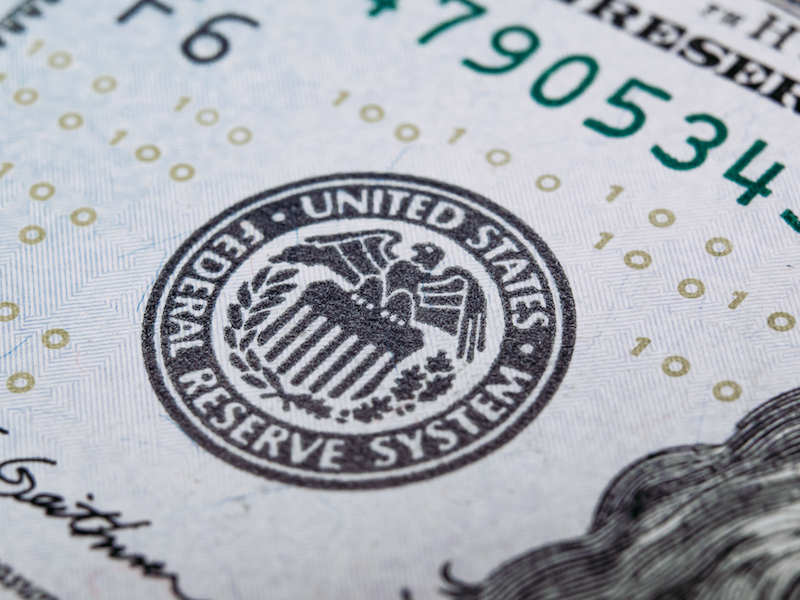
iStockphoto/Vladislav-Stepanov
Siena Sheldon
Welcome to Soundbites, weekly insights on market trends and investment strategies, brought to you by Investment Executive and powered by Canada Life. For today’s Soundbites, we’re talking about the Fed’s next move with Siena Sheldon, vice president, client portfolio manager with Brandywine Global Investment Management. We talked about how markets are positioned, where she sees opportunities, and we started by asking what she’s expecting from the Fed’s December meeting.
Siena Sheldon (SS): Earlier this fall, markets were confident in a three-cut path, but that view has broken down. The Fed is clearly divided. And with the October jobs report cancelled, this gives both the market and the Fed very little to read heading into this meeting. And the data that we do have remains somewhat mixed. So, with the Fed so divided, it’s a close call. But we lean slightly toward a cut. Some Fed officials have noted early signs of softening in the labour market. But at the same time, we’re seeing signs that cash isn’t flowing as easily through the system, as repo rates are trading a bit higher than the Fed’s target, which points to tighter liquidity. To help, the Fed has already signaled it will end quantitative tightening in December. But a small, measured cut now could help ease some of those liquidity pressures and still leave the Fed room to pause policy later on. Either way, it’s important to remember that the bigger story here is that the lower terminal rate of around 3% has not changed. It’s just a question of the pace and path of how we get there.
Watching inflation
SS: The key is not headline CPI here, but core services inflation, because that’s what ties directly to the labour market and wages. Goods inflation, at least for now, has been sticky, but not spiking. Companies, for now at least, are managing price increases gradually, often taking profit hits themselves instead of passing that on to the consumer. So really, the number to look at in CPI is the services inflation.
How markets are positioned
SS: A few months ago, markets were almost certain we’d see a December rate cut. But now Fed officials themselves are very split between a cut and a pause, and markets reflect that uncertainty. Part of the issue is the lack of fresh data before this meeting. We’ve also seen markets swing almost daily as Fed officials speak. Hopefully we will get more clarity in the days leading up to the Fed decision. But for now, with such limited data, expect volatility with what markets are pricing in, heading into the Fed decision.
Where the U.S. and global economies are headed
SS: We expect a soft patch in U.S. growth in early 2026, followed by a moderate re-acceleration to growth as some tailwinds kick in. In the U.S., you’ve got tax incentives supporting capital spending, credit growth as rates drift lower, and eventually those lower front-end rates feeding through to housing and consumer demand. You also have the AI productivity story. It’s too early to measure, but if even a fraction of that productivity shows up, it extends a cycle, and it supports growth in 2026. Globally, we see a story of growth convergence. Europe and Canada — both of which have leaned on fiscal policy — should pick up speed as the U.S. studies its fiscal policy. So the setup into next year is slow but steady, with potentially improving U.S. growth after the first quarter.
On positioning portfolios
SS: We’re neutral on U.S. Treasury duration, using it more as a ballast and diversifier against credit risk than as any sort of directional bet. What you’ve been seeing recently is, even with fiscal risks, there is a bid for duration when we have jobs numbers that come in lower than expected. And that’s how that ballast is supposed to work. A few years ago, duration was much more volatile and more of a drag. Now we’re seeing its diversification benefits again, and we see that as valuable. Also, you’re still getting a good yield on the intermediate part of the curve, and that strikes a great balance between yield and protection. Going into next year, we may see longer-term yields rise again once growth stabilizes, and also we have a lot of fiscal uncertainty coming into next year. On the credit side, we’re focusing on quality carry. So, think strong balance sheets, consistent cash flows and short maturities. We like shorter-dated high yield for the pull-to-par, dynamic and the yield cushion. These bonds give you income without as much rate sensitivity. We also like higher quality U.S. residential MBS. This offers good yield with a high-quality tilt and some diversification from corporate credit. We also, like select emerging markets, especially in Latin America, given their high real and nominal yields. The global growth convergence story, a weaker dollar, and a Fed that is easing, all bode well for the asset class. What we’re avoiding are longer-duration or lower-quality credits that rely heavily on market liquidity. In an environment like this, liquidity can dry up quickly, and you don’t want to be forced to sell.
Key risks to bond investors
SS: The biggest risk for bond investors right now is fiscal risk in the US. We’re heading into midterms next year, and it’s hard to imagine any party wanting to tighten spending that could keep deficits wide and term premiums elevated. Another risk is the Fed’s leadership turnover. We could have a few new members next year, which might shift the tone or the reaction function of the Fed and bring uncertainty to the markets. And finally, trade risks. The Supreme Court’s tariff ruling could create short term noise, even if tariffs are reduced in some way, markets will be watching how the fiscal math shifts. Tariffs right now at least are a revenue, and they fund at least some of that deficit. If that goes away, we could see another like higher in yields. So overall, the risks are less about one shock and more about policy uncertainty. The common thread is that the Fed and the market are both navigating this with partial visibility, at least right now, and that keeps volatility elevated, even if fundamental to stay intact.
And finally, what’s the bottom line for fixed-income investors in the current moment?
SS: The bottom line is that even in this uncertain environment, you don’t need to chase tons of duration or big bets. Yields are still high, even if the Fed cuts a few times, especially in select emerging markets and shorter dated credit. You can generate attractive income with shorter maturity bonds and let the coupon work for you. Volatility is also likely here to stay with data gaps and political noise. But those create opportunity for active investors. So, our message is really lean into quality carry. Let income drive returns rather than price movement. And potentially use some U.S. Treasury duration as a diversifier or stabilizer.
Well, those are today’s Soundbites, brought to you by Investment Executive and powered by Canada Life. Our thanks again to Siena Sheldon of Brandywine Global Investment Management. Visit us at investmentexecutive.com, where you can sign up for our a.m. newsletter and never miss another Soundbite. Thanks for listening.
**
Go back to the article.