
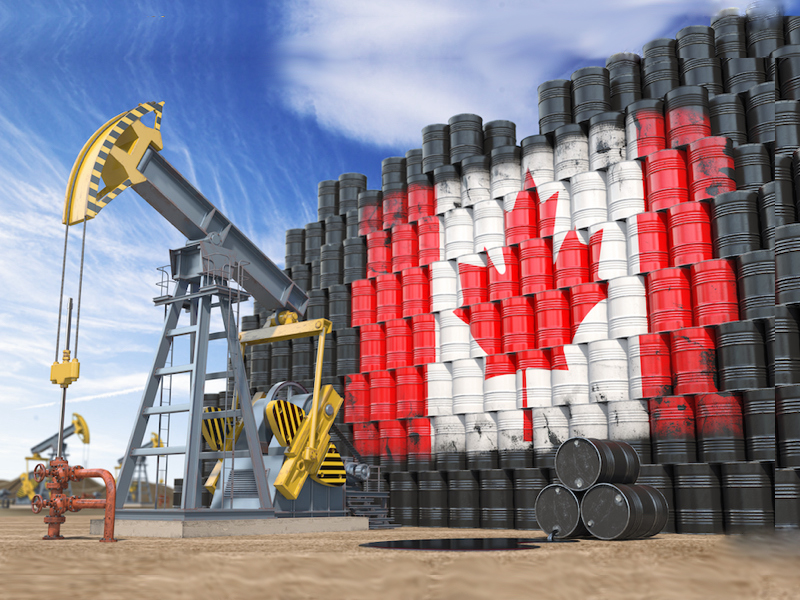
Typically, the resource-driven Canadian economy, and the Canadian dollar, would be expected to be among the winners of a sharp rise in energy prices — but the loonie has barely been affected by the current spike in global oil prices — and research from Scotiabank Economics indicates that the source of the price action is likely a key reason why.
In a new report, Scotia economists note that, the historic link between the Canadian dollar and oil prices has seemingly weakened over the past decade. However, the connection between energy prices and the value of the loonie still exists — and the reason behind rising oil prices matters when it comes to the impact on the currency.
“Our analysis shows the [Canadian dollar] responds significantly more to demand‑driven oil price increases than to supply‑driven ones,” it said.
Indeed, the report noted that, when rising global demand drives prices higher, the loonie benefits from increased exports, which underpins rising income, and increased investment.
By contrast, supply‑driven spikes in oil prices, “are often viewed as transitory and associated with elevated uncertainty,” it said — resulting in weaker income and investment gains.
As a result, supply-driven price shocks tend to translate into little impact on the loonie.
In the current environment, the weak response of the dollar to soaring oil prices likely reflects the fact that it’s a supply-driven spike, coupled with rising uncertainty and weaker global demand, along with a “flight to safety” into U.S. dollars. All of those have combined to lean against any upward momentum for the loonie.
Against that backdrop, it’s expected that the current rise in oil prices will likely provide little support to the value of the Canadian dollar.