
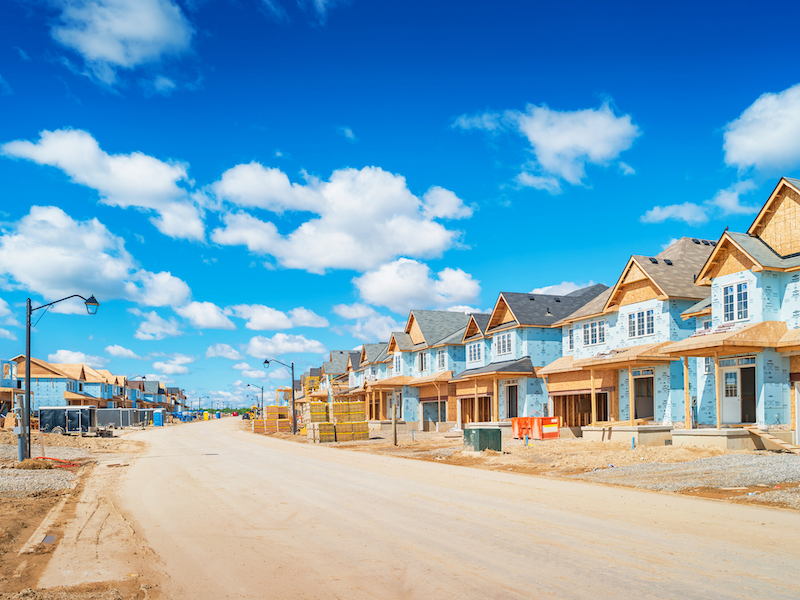
While the federal government and Canadian cities are making progress expanding the housing supply, provinces must do more to build quality homes, a new report says.
No province scored higher than C+ in the report by the Task Force for Housing and Climate, a non-governmental group formed in 2023 with support from the Clean Economy Fund.
The task force’s “report card” evaluated governments on policies to build homes quickly and sustainably. It gave the federal government the highest grade — a B — while Alberta ranked lowest with a D+. The rest of the provinces scored in the C range.
Mike Moffatt, report author and founding director of the Missing Middle Initiative at the University of Ottawa, said provinces have largely avoided “scrutiny” for their role in the housing crisis, while Ottawa and cities have faced criticism for red tape and high costs.
“Provinces really hold the key here. They have the most policy levers and, in many cases, they’ve actually done the least,” he said.
The task force is co-chaired by former Edmonton mayor Don Iveson and former federal Conservative deputy leader Lisa Raitt. Mark Carney was a member before becoming federal Liberal leader.
“Currently, no government is doing enough to get these homes built,” Raitt said in a statement.
The report assessed government policies on factory-built housing, market gaps, density, high-risk area mapping and building code updates.
Moffatt noted variability within provinces. Saskatchewan and Ontario score well on building away from high-risk areas but lag on increasing density.
British Columbia, Quebec and Prince Edward Island earned the highest provincial score of C+.
B.C.’s grade suffered due to slow permit approvals and high building costs, despite encouraging density “on paper,” Moffatt said.
Alberta’s pace of housing starts is strong but driven mainly by municipal leadership in Calgary and Edmonton rather than provincial policy.
Premier Danielle Smith said in November the province “is not standing in the way of the private sector to build more affordable housing” and that increasing supply would “automatically” reduce costs.
Moffatt agreed lowering development barriers is critical but said Alberta must also take responsibility for the housing demand created by its campaign to attract Ontarians.
The province also needs to ensure homes are built sustainably, away from wildfire paths, and fill social housing gaps.
“We need both. We need a strong, robust private sector to deliver housing, but we also need government to come in and fill in the gaps,” he said.
Moffatt said provinces are falling behind on mapping flood plains and must address provincial legislation that increases development charges.
The report card is based only on implemented policies and does not reflect proposed legislation such as Ontario’s Bill 17, designed to speed permits, simplify development charges and fast-track infrastructure.
The federal housing accelerator fund, which encourages municipalities to simplify zoning to increase construction, has made progress but needs enforcement tools to hold cities accountable after funding deals, the report said.
Moffatt hopes to use the report card to track housing progress and plans separate research on municipal policies.