
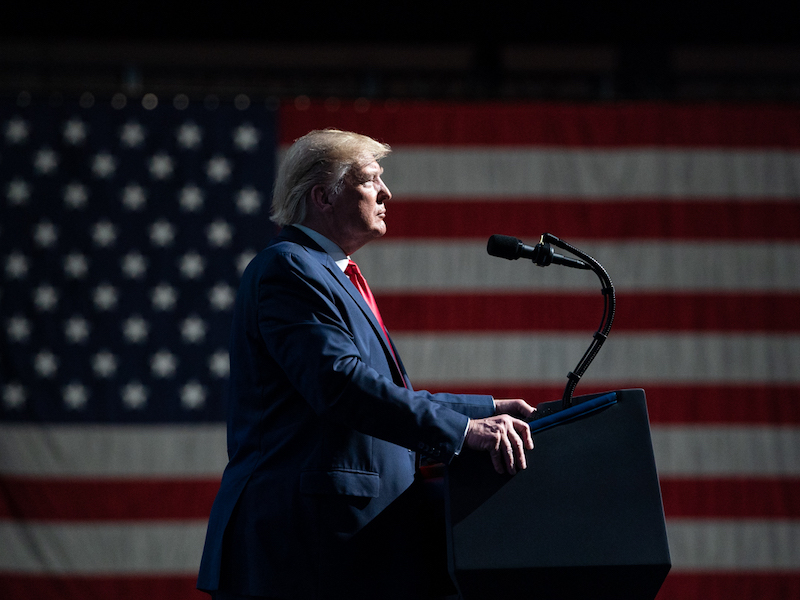
Stock markets in Canada and the U.S. rose for a second day after U.S. President Donald Trump walked back tariffs he had earlier threatened.
“It’s just recovery from the dip we had earlier in the week with all the concern about Greenland and now the Davos stuff going on, and so we’re kind of bouncing back to where we were,” said Michael Currie, senior investment advisor at TD Wealth.
The S&P/TSX composite index was up 151.17 points at 33,002.70.
In New York, the Dow Jones industrial average was up 306.78 points at 49,384.01. The S&P 500 index was up 37.73 points at 6,913.35, while the Nasdaq composite was up 211.20 points at 23,436.02.
World leaders have been in Davos, Switzerland, this week for the World Economic Forum. The event featured speeches from Prime Minister Mark Carney and Trump.
On Wednesday, Trump said he had reached “the framework of a future deal with respect to Greenland” and called off 10% tariffs on European countries that he said were opposed to the U.S. acquiring the Arctic island.
It’s the latest example of Trump making a big, initial threat, only to pull back after seeing how much pain it created in financial markets. The pattern has led to the “TACO” acronym, suggesting that “Trump Always Chickens Out” if markets react strongly enough.
The pattern has also led to deals for Trump that outsiders may have initially considered unlikely if not for his extreme initial threat.
“He does always pull back on what his No. 1 demands are. But on the other hand, he always seems to get a deal,” Currie said.
Details are still sparse about the Greenland framework that Trump said he reached with the head of NATO. And it is not a signed deal yet.
“No one knows what he’s thinking or what he actually wanted, but it sounds like at some point he always wanted a deal out of Greenland,” Currie said.
Currie also said that a rise in gold prices benefited the S&P/TSX composite, which has more exposure to precious metals than U.S. markets.
The February gold contract was up US$75.90 at US$4,913.40 an ounce.
Meanwhile, U.S. investors also reacted to fresh inflation figures that showed the U.S. Federal Reserve’s preferred inflation gauge ticked up in November in the latest sign that prices remain stubbornly elevated.
Consumer prices rose 2.8% in November from a year earlier, the U.S. commerce department said Thursday, up from a 2.7% annual pace in October.
Currie said that while the Fed’s preferred measure of inflation moving higher was a “negative,” it wasn’t a “dramatic move.”
The Canadian dollar traded for 72.47 cents US compared with 72.39 cents US on Wednesday.
The March crude oil contract was down US$1.26 at US$59.36 per barrel.
— With files from The Associated Press