
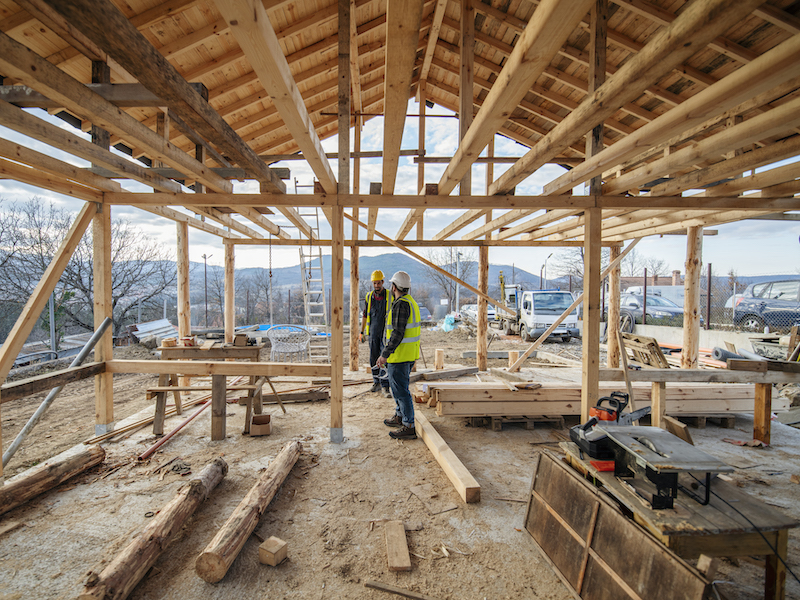
Canada’s struggling housing market faces a potential supply and demand paradox — affordability is improving amid weaker demand, but at the risk of undermining the incentive for homebuilders to create more supply.
In a new report, economists at National Bank Financial Inc. (NBF) note that the housing market was distorted by unprecedented population growth between 2022 and 2024, which resulted in a shortage that hurt housing affordability — as housing prices rose, and rents increased faster than wages.
Recently, that record population surge has been reversed, with the federal government adopting policies to curb immigration, which have resulted in a declining population, thereby easing some of the underlying pressure on the housing market.
Indeed, in the third quarter of 2025, Canada recorded its first quarterly decline in population — and, NBF said that the population is also forecast to contract in 2026, before stabilizing in 2027.
Against that backdrop, the formation of new households over the next couple of years could come in at just 50,000 in 2026 and 90,000 in 2027, which would be, “the lowest rates ever recorded over a two-year period.”
With demand for new housing at this relatively low level, the shortage that developed over the past few years could be gradually eliminated over the next few years — as long as the current pace of new construction holds up.
However, NBF warns there’s a potential paradox here — namely that the risk that weaker demand, and improved affordability conditions, will undermine the potential profitability of real estate development projects — leading to a decline in new supply that undermines the path toward a healthy rebalancing in the housing market.
“For real estate developers, lower rents and slower sales of their units pose an additional challenge to the financial sustainability of the projects they wish to develop,” the report said — on top of headwinds such as higher construction costs, elevated long-term financing costs, and increased macroeconomic uncertainty, amid trade uncertainty and rising geopolitical risk, which are weighing on both housing buyers and builders.
If these conditions ultimately lead to a weakening of supply, “the government will therefore have to put in place appropriate incentives to avoid such a vicious cycle,” the report said.
While there are already a variety of programs in place that are designed to support housing supply, these incentives may have to be recalibrated, “to ensure that housing supply is met,” it suggested.