
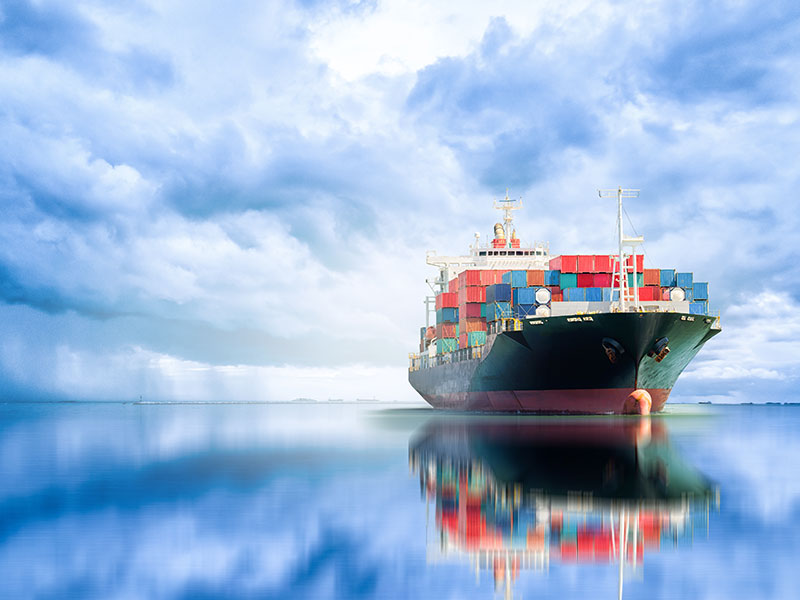
Rising fuel prices caused by the war in Iran have begun to raise costs for Canadian shippers and ripple out to consumers, as fallout from the fighting filters into the broader economy.
The price of heavy fuel oil — used to power container ships and other large vessels — at the world’s top 20 refuelling hubs has nearly doubled since the U.S. and Israel launched attacks in late February, according to figures from data platform Ship & Bunker.
Container shipping rates have started to rise in turn, increasing 12% in the two weeks ended last Thursday, according to the Drewry world container index.
As the strikes spiralled into a regional conflict, major shipping companies halted voyages through the Strait of Hormuz as well as the Suez Canal, with Red Sea-bound vessels now rerouting around Africa’s Cape of Good Hope at a greater cost in fuel, labour and travel time.
The higher shipping costs, combined with soaring diesel fuel rates that have hit trucking firms and railways, are expected to force importers, retailers and manufacturers to raise their prices, resulting in more expensive purchases at the checkout counter, experts say.
North America is more insulated from price shocks than Europe or the Middle East, but the disruption still spells “bad news for consumers and shipping companies alike,” especially if it drags on, said Laval University business professor Yan Cimon.
“It’s more expensive to ship stuff around, not just energy but containers,” he said.
“Typically it would be more of a European concern, but Canada is affected because a lot of what we consume or use often transits through Europe,” he said. Affected products range from high-tech machinery and electronics to pharmaceuticals and refined chemicals.
The Persian Gulf is also a critical source of global fertilizer. That means farmers are seeing their costs soar in real time as diesel and fertilizer prices leap.
Nearly one-third of urea, a widely-used nitrogen fertilizer, passes through the Strait of Hormuz, according to Mary-Jane Bennett, a transportation consultant based in Vancouver.
Many farmers in Canada have already bought fertilizers for the spring planting season, but there are concerns about purchases later in the year.
“Canadian farmers are going to be hit hard,” Bennett said, noting that urea prices have ballooned by nearly 50% since the conflict began. “It’s fairly clear that what we’re headed toward is food inflation.”
Rail transport costs are also increasing. Canadian National Railway Co. hiked its fuel surcharge on domestic container shipments to 30% from 21% before the war, and to 38% from 26% for cross-border cargo. The surcharges are based on diesel fuel prices.
Consumers are already feeling the jump in the price of oil and its derivatives — gasoline, jet fuel and diesel — at the pumps and on their plane fares.
The CEO of Danish shipping giant Maersk told the BBC last week that higher fuel prices will be passed on to the company’s clients and ultimately “on to the consumers.”
Just a month earlier, Maersk was among the major shipping companies to launch a tentative return — now called off — to the Red Sea, where fears of Houthi attacks have reared up once again more than two years after the Iran-backed militant group began to target commercial vessels off the coast of Yemen.
The ripple effects have begun to hit Canadian shores, with many ship arrivals now postponed.
“Supply chains are highly interconnected, and prolonged disruptions in any region will create impacts elsewhere over time, such as vessel delays or schedule adjustments, which are now starting to develop,” said Lori MacLean, a spokeswoman for the Halifax Port Authority, in an email.
The war will mean “further weaponization of trade and shatter hopes of a large-scale return of container shipping to the Red Sea in 2026,” said Peter Sand, chief analyst at freight analytics firm Xeneta, in a news release on the day the U.S. and Israel attacked Iran, which launched retaliatory strikes in turn.
Airfreight, which has seen demand rise amid the dearth of container ship voyages, is also costing more as aviation fuel prices skyrocket.
“You’re going to start having money tacked on to making any transport movement,” said John Corey, president of the Freight Management Association of Canada.
“Ultimately, that’s going to flow through and the consumer is going to pay for that.”