

Equity markets have largely surpassed expectations in 2025, but there has been sufficient volatility in recent years to increase interest in active investment management. Increasingly, the smart money is employing hybrid strategies that combine index investing in efficient, relatively stable markets with the selective application of active management elsewhere.
Active ETF assets in Canada have grown by 15 times in the decade to March 2025, according to Morningstar. During the same period, passive ETFs merely quadrupled. Manulife has reported that actively managed ETFs made up roughly 42% of net inflows into Canadian ETFs in 2024. That’s despite representing less than a third of total ETF assets under management.
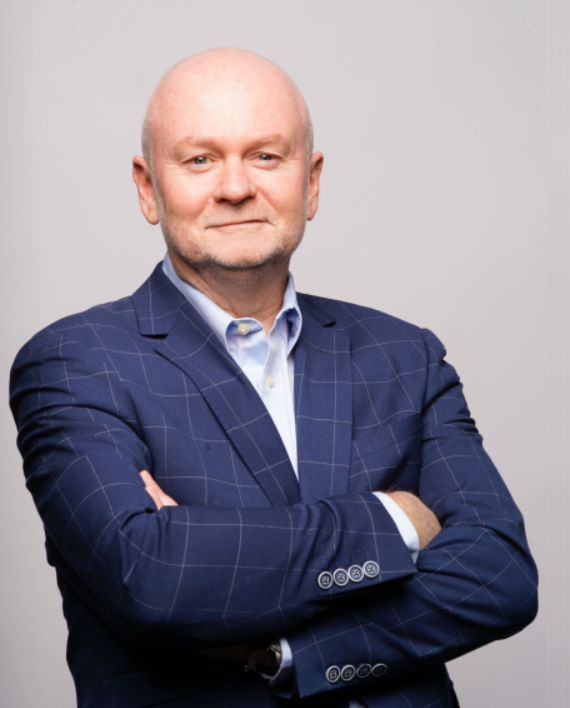
Recent advances in active manager selection have the potential to spur still more growth. Michael Ervolini has spent the bulk of his career developing analytics designed to help advisors and institutional fund managers identify, and in fact quantify, manager skill. To date, that work has focused on publicly traded equities, but he says the groundwork he’s laid can be applied to other asset classes.
“If you look at all the conventional analytics used by 99.9% of decision-makers today, it’s things like relative return, information ratios, attribution, upside capture, downside capture and on and on. What they’re really doing is providing different looks at a fund outcome,” Ervolini said in an interview last week.
“If you start with outcomes, it’s pretty hard to get to a skill measure,” he explained. “Presumably, that’s what we’re all looking for.”
Ervolini was CEO of Cabot Investment Technology, Inc., an analytics firm that built a software program to do just that. In 2021, he sold it to FactSet, a Norwalk, Conn.-based company that provides data, insights and technology to the global financial services industry. Ervolini joined to help with the integration, and now serves as a distinguished fellow.
The idea — not unique to FactSet — is to measure investment manager skill by “relating decisions to outcomes,” Ervolini said. “Once you’re in that framework, you can get things that are very meaningful. Like, how good is the manager at buying? How good is the manager at selling? How good is the manager at sizing positions?”
The analysis goes deeper than that, of course. It allows advisors to evaluate managers not simply based on their track record, but on their process too. In other words, it helps advisors select managers they can rely on to add value in the future.
For example, you could ask a manager how much excess return their new investments generate over a given period of time. Or, rather than simply accepting a manager’s description of what kind of equities they buy, you can run analytics on what they have bought to determine the stocks’ characteristics.
“Repeatability is based on skill,” he said. “And what is skill? It has two components. One, it’s the quality of the expert judgment the manager can apply. Two, it’s the integrity of the process they use that can guide the manager towards repeatable decisions.”
A sell-side example: “Can you show me that when stocks you own are down significantly — 20%, 30% or 40% — that you can differentiate which of them to keep and which of them to sell? That’s a very different way of asking about a stop loss,” Ervolini said.
He believes this can reframe our understanding of the active vs. passive investment debate. “If you have everything I just described, and you know that their skills are really strong, or getting better, that their process is robust and they stick to it, that’s a whole different level of confidence that you can have.”
Ervolini has written a book on all of this, entitled Skill Versus Luck: Taking The Guessing Out Of Equity Fund Selection. It’s due in February.