
“Coming into 2026, it was anticipated that we’d be experiencing the worst oil supply glut in history,” said Eric Nuttall of Toronto-based Ninepoint Partners LP, portfolio manager of the Ninepoint Energy Fund. “That narrative is now dead.”
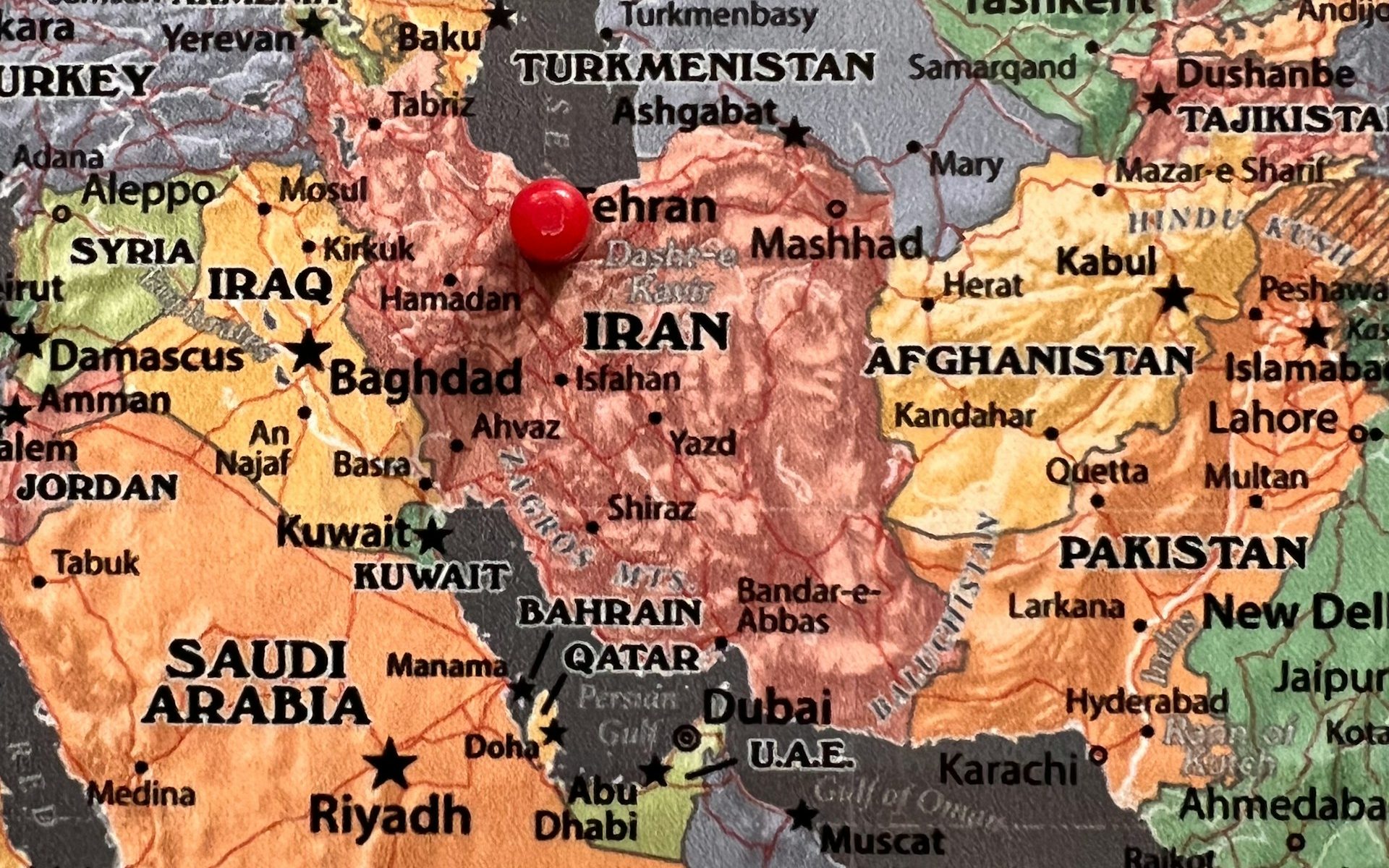
Instead, extensive damage to Middle East energy infrastructure, supply bottlenecks at the Strait of Hormuz and continued uncertainty about future warfare has caused world oil prices to soar.
Energy company shares have gone along for the ride. The S&P/TSX Capped Energy Index, the market benchmark for the Canadian oil and gas sector, had a total return of 15.8% in March alone. It is up 42.4% in the first quarter.
Tracking this index are two of more than a dozen ETFs in the energy equity category: iShares S&P/TSX Capped Energy Index ETF, the category’s largest with $2.25 billion in assets; and the $134-million Global X S&P/TSX Capped Energy Index Corporate Class ETF.
Nuttall expects the war to have a lasting impact on oil prices. “I think you’ll see countries all around the world really question the value of OPEC’s spare export capacity, when much of it does lie behind the Strait of Hormuz, where a US$30,000 drone can basically incapacitate it.”
Before the attack on Iran by the U.S. and Israel, Nuttall’s expectation was that this year’s floor price — the lowest that a barrel of oil would fetch — would have been about US$60. Now he and his colleagues are assuming a floor price of US$80, based on reduced supply “combined with an enduring political risk premium.”
Nuttall said that with its long-dated oil reserves and pipeline capacity, Canada’s oil industry is well positioned, and higher stock prices don’t fully reflect its advantages. “You still have Canadian companies trading at a discount to the global super majors. We think they should be trading at a premium.”
Though the S&P/TSX Capped Energy Index has 26 constituents, more than half of its market-cap weighting is in just two stocks since the cap takes effect at 25%. At a recent 27%, top holding Suncor Energy Inc. is due to be trimmed, while Canadian Natural Resources Ltd. (24%) is close to the cap.
Diversification across subsectors
A variation of the passive indexing of Canadian energy stocks theme are the $343-million BMO Equal Weight Oil & Gas Index ETF and the $299-million Global X Equal Weight Canadian Oil & Gas Index ETF.
Both these ETFs have about a dozen holdings, with a diverse mix of pipelines, oil and gas producers and integrated companies. This type of strategy is suitable as a core holding for energy exposure, “because of the diversification and how it touches upon all of the subsectors within the Canadian energy space,” said Jean-Christian Daigle, vice-president and portfolio manager with Global X Investments Canada Inc.
Global X, which offers the Canadian industry’s widest selection of energy-themed ETFs, manages the category’s largest fund that employs covered calls to generate tax-advantaged option premiums.
The $746-million Global X Canadian Oil and Gas Equity Covered Call ETF invests in the same underlying holdings as the company’s equal-weight energy ETF.
The covered-call ETF currently yields 11% annually. It makes monthly distributions that consist of capital gains from the option premiums, and company dividends.
As options-overlay specialist Daigle acknowledges, the covered-call ETF will underperform in a bull market or when stocks keep appreciating. There’s a tradeoff between income and growth. To generate high distributions, “you have to give up a bit of that upside.”
The challenge for covered-call traders like Daigle is not to give up too much stock-price appreciation. Global X has done so by striking a balance between stocks that have covered calls written on them and those that do not.
Currently, Daigle said the coverage ratio is 45% of the portfolio, allowing more than half of the stock holdings to make gains without the risk of being called away. “It’s a very tricky balance because there’s a directional aspect to a covered call where we are capping some of the upside returns.”
Other covered-call ETFs include BMO Covered Call Energy ETF and CI Energy Giants Covered Call ETF, with the latter available in either currency-hedged or unhedged classes. Both the BMO and CI ETFs invest primarily in large non-Canadian companies, but they also have domestic holdings.
Excluded from the energy category are so-called enhanced ETFs, namely Evolve Canadian Energy Enhanced Yield Index Fund and Global X Enhanced Canadian Oil and Gas Equity Covered Call ETF. Classified as alternative equity focus funds, they’re allowed to employ leverage of up to 125%, which is 25% greater than the underlying holdings.
For the Global X enhanced ETF, this brings the distribution yield to 16% while also increasing volatility. Daigle suggests that such a strategy would be suitable for income-oriented investors who have an appetite for risk and a long time horizon.
As for non-leveraged covered-call strategies, Daigle said they are beneficial in the current environment, until there’s more clarity on the future growth prospects of the underlying stocks.
For investors seeking to place bets on the commodities themselves, Global X’s offerings also include Global X Crude Oil ETF and Global X Natural Gas ETF, as well as even riskier BetaPro commodity ETFs that provide leveraged and inverse-leveraged exposure.
The most aggressively managed energy equity ETF is Ninepoint Energy, a mutual fund with an ETF series. Its strategy is driven by high conviction, at times high portfolio turnover and scant regard for market benchmarks.
Heading into the new year, said Nuttall, the fund was positioned at about 60% natural gas and 40% in oil. “When it became obvious that the conflict was becoming more real, we continued to pivot more and more towards oil. So, we’re 100% oil-focused right now.”
Other than the large-cap Suncor and Cenovus Energy Inc., the remaining stocks are mid-caps. The total number of holdings is only 10, of which eight are Canadian names.
“We’re looking for opportunities which are not widely held and represent meaningfully higher upside potential than the household names that are heavily represented in the major indices,” said Nuttall.
“When half of the [S&P/TSX Capped Energy] index is just two companies, you’re really not getting exposure to names that are much less efficiently priced, which are a lot less well owned, where a little bit of buying power can lead to a meaningful rally in the share price.”