
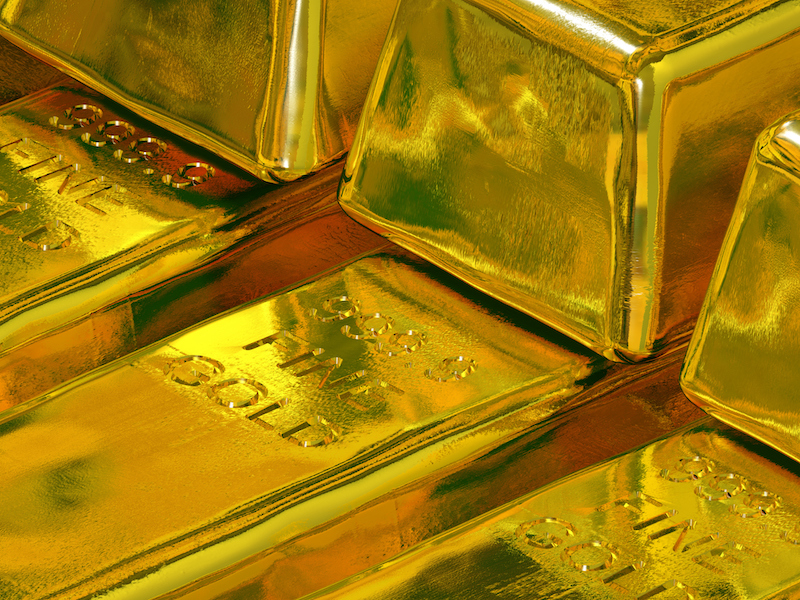
Gold futures have soared above US$4,000 per troy ounce for the first time, as investors seek a “safe haven” amid the U.S. government shutdown.
Gold futures in New York jumped above the US$4,000 mark Tuesday morning, marking a record high. The going price for New York spot gold had previously closed at US$3,960.60 per troy ounce — the standard for measuring precious metals — on Monday.
Gold sales often rise sharply when anxious investors look for secure investments. Before Tuesday, gold and other metals, such as silver, had seen wider gains over the past year, particularly as President Donald Trump’s tariffs plunged much of the world into economic uncertainty.
How much have gold prices climbed?
Gold futures are up about 50% since the start of 2025, trading at around US$4,013 per troy ounce as of 11:30 a.m. ET Tuesday. That’s up from roughly US$2,670 at the beginning of January.
Other precious metals have also gained. Silver futures are up about 60%, trading at close to US$48 per troy ounce Tuesday morning.
Why are prices rising?
Much of it boils down to uncertainty. Interest in buying metals such as gold typically spikes when investors are anxious.
Much of the recent economic turmoil stems from Trump’s trade wars. Since the start of 2025, steep new tariffs imposed on goods coming into the U.S. have strained businesses and consumers alike, pushing costs higher and weakening the job market. Hiring has dropped while inflation continues to inch upward. Consumer pessimism is growing.
The current U.S. government shutdown has added to those anxieties. Key economic data has been delayed, and scores of federal employees are feeling the effects of furloughs and unpaid work, with no immediate end in sight. Trump has threatened to use the shutdown to carry out mass firings and possibly close offices permanently in an effort to punish Democrats for voting down GOP legislation.
Giovanni Staunovo, commodity analyst at UBS Global Wealth Management, also points to continued weakness of the U.S. dollar and renewed rate cuts from the Federal Reserve. Last month, the Fed cut its key interest rate by a quarter-point and projected it would do so twice more this year.
Investments in gold have been driven by other factors over time. Analysts have cited strong gold demand from central banks, amid rising geopolitical tensions such as the ongoing wars in Gaza and Ukraine.
“The gold rally started in 2022,” Staunovo said via email Tuesday. He noted that the “trigger point” was when the U.S. and other Western allies froze about US$300 billion of Russian foreign holdings at the start of the war in Ukraine.
Is gold worth the investment?
Advocates of gold call it a “safe haven,” arguing it can diversify and balance investment portfolios and mitigate potential risks. Some investors also value owning something tangible that may increase in value over time.
Still, experts caution against putting all your eggs in one basket. Critics say gold isn’t always the inflation hedge many claim, and there may be more efficient ways to protect against potential capital loss, such as derivative-based investments.
The Commodity Futures Trading Commission has also warned investors to be cautious. Precious metals can be highly volatile, the commission said, and prices rise with demand — meaning “when economic anxiety or instability is high, the people who typically profit from precious metals are the sellers.”
If investing in gold, the commission advises educating yourself on safe trading practices and being wary of scams and counterfeits.
“Gold is perceived by many market participants as a safe haven asset. But investors need to be aware it has a volatility of 10-15%,” Staunovo added, noting that smaller amounts of physical gold, such as coins or 1-gram bars, also have larger gaps between buying and selling prices.
Health and environmental concerns
The rush for gold has also caused health and environmental concerns, with officials citing rising demand for mercury, a toxic metal used in illegal gold mining worldwide.
Mercury is commonly used to separate gold during artisanal or small-scale mining. It pollutes water, accumulates in fish, enters the food chain, and builds up in people’s bodies, causing neurological and developmental harm. Even small-scale exposure can be dangerous to workers and local residents.
The Associated Press has reported on mercury poisoning linked to gold mining in countries including Senegal, Mexico and Peru.