
PAID CONTENT
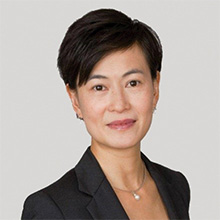
Vice-president and Head of Asset Allocation,
NEI Investments
The global trading order is shifting at a time when many securities are priced for perfection. That leaves investors with little margin for error, making it that much more important for them to partner with experts who are practised at challenging assumptions and adapting, says Judith Chan, Vice-president and Head of Asset Allocation with NEI Investments.
“The world is changing really quickly. We can’t stick with what worked before because what worked before may not continue [to work]. We need to adapt quickly. We can’t rely on old assumptions, and we need to unlearn old habits.”
The first quarter of 2026 saw significant rotation, as market leadership broadened beyond AI hyperscaler cloud computing platforms and other crowded momentum trades. Capital found its way into value, cyclicals, and other asset-heavy areas of the market — and that was before the war in the Middle East disrupted energy supplies. In response to all the upheaval, many investors are jittery.
Historically, geopolitical conflicts play a key role in investor sentiment in the near term, says Chan, but their impact on investment markets tends to be short-lived. Over the long term, she emphasizes, markets are driven to a greater extent by forward-looking projections for growth, earnings, valuations, and inflation.
Looking through a long-term lens, Chan continues to see opportunities for investors across the technology theme, through participation in the AI supercycle that will stretch over decades as AI is applied across many industries. We’re still at the beginning of this process, she says. The focus for now is on building the infrastructure, such as the electricity supply required to support expanding demand for AI.
“We need to be agile in following along development of this growth so that we move to the next phases along with it.”
Build resilience into portfolios to help soften volatility
Turning to other sectors of the economy, Chan says one way to balance growth against risks is to focus on higher-quality, lower-volatility companies — the “boring ones.” Some have negative momentum because markets have been ignoring them, but they may also be considerably less pricey than the current highflyers and therefore less vulnerable to downside risks.
Her team has found pockets of relative value in smaller-cap companies, emerging markets companies, and dividend-paying companies.
“In times like this, when the market sells off, the initial sell-off tends to be quite indiscriminate. Everything is sold off,” she notes. “For long-term investors, this is the time to pick up the baby when it’s thrown out along with the bath water.”
Zeroing in on relative value is helpful in an environment in which sky-high valuations limit room for stocks to rise further. Expensive stocks are also more vulnerable to drawdowns in response to even mildly discouraging news.
“We have to scrutinize and rethink everything, and make sure we can justify for the continuous upside,” she says. “Otherwise, we have to anticipate a lower expected return moving forward.”
Positioning at NEI already more defensive
At NEI, rising valuations over the past couple of years had already nudged portfolios toward more conservative, defensive positioning. “They’ve avoided the deep part of the V [market pattern], and they’re in a better spot for moving forward,” she says.
As the team engages in its annual portfolio re-optimization process this spring, it is incorporating updated assumptions for the next 10 years. It continues to watch global developments closely, including considering concerns about sustained high energy prices which may lead to a rise in inflation. But the team maintains discipline in making allocation decisions, with long-term expectations in sharpest focus.
A data-driven, multilayered approach scans across the universe of potential assets and conducts deep analysis of investment managers to isolate what precisely adds value to a portfolio and what does not. For example, when examining a manager’s excess returns, the team parses the data to separate luck from skill and speaks directly with managers to understand precisely how their methodology contributes to performance. “We want to allocate to [managers] that can add value consistently — those that have skill as opposed to factor tilts. For the areas where we don’t think we can add value — for example, short-term market timing and macro-driven factors — we want to neutralize [them] closer to the benchmark.”
Chan says an important aspect of the NEI approach is that it enables the team to take emotion out of the equation. Sub-advisors aren’t chosen by whim or intuition. Every hypothesis must be proven by data.
That’s critical at all times, but perhaps especially during periods of heightened volatility, because, she says, successful investing is often counterintuitive. For example, it may feel better to cut losses and run from a drawdown, but staying invested through market turmoil is often the better long-term strategy.
“It’s essential to understand the drivers of returns by asset class, understand very well how your portfolio has levers to pull in different environments [of positive and negative growth, and positive and negative inflation], and ensure you’re actually diversified…in a deeply interconnected world.”
To learn more about NEI investments, visit https://www.neiinvestments.com/about/nei-difference.html
This material is for informational and educational purposes, and it is not intended to provide specific advice, including, without limitation, investment, financial, tax, or similar matters. The views expressed herein are subject to change without notice, as markets change over time. Information herein is believed to be reliable, but NEI does not warrant its completeness or accuracy. Views expressed regarding a particular security, industry, or market sector should not be considered an indication of trading intent of any funds managed by NEI Investments. Forward-looking statements are not guaranteed of future performance, and risks and uncertainties often cause actual results to differ materially from forward-looking information or expectations. Do not place undue reliance on forward-looking information. Commissions, trailing commissions, management fees, and expenses all may be associated with mutual fund investments. Please read the prospectus and/or Fund Facts before investing. Mutual funds are not guaranteed, their values change frequently, and past performance may not be repeated. NEI Investments is a registered trademark of Northwest & Ethical Investments L.P. (“NEI LP”). Northwest & Ethical Investments Inc. is the general partner of NEI LP and a wholly-owned subsidiary of Aviso Wealth Inc. (“Aviso”). Aviso is the sole limited partner of the Manager. Aviso is a wholly-owned subsidiary of Aviso Wealth LP (“Aviso Wealth LP”), which, in turn, is owned 50% by Desjardins Financial Holding Inc. (“Desjardins”) and 50% by a limited partnership owned by the five Provincial Credit Union Centrals (the “Centrals”) and The CUMIS Group Limited.