
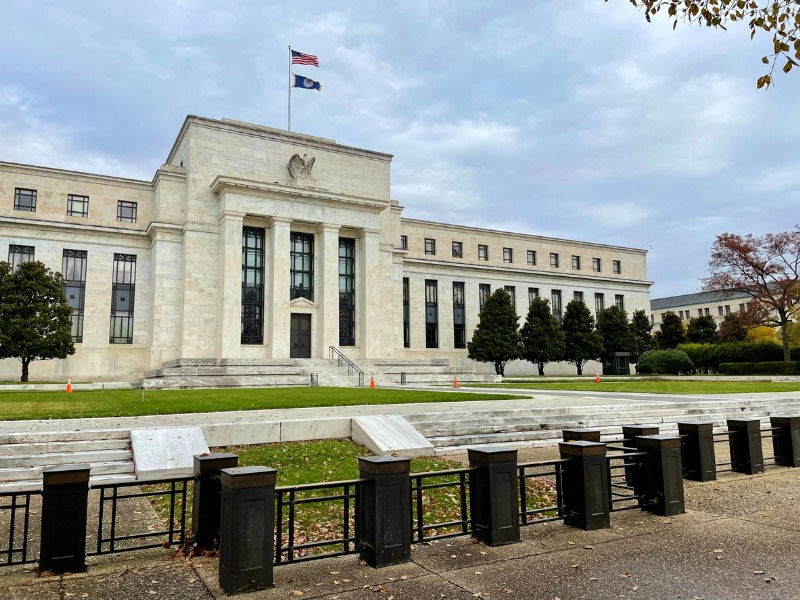
In a sign of how unusual this week’s Federal Reserve meeting is, the decision on interest rates — usually the main event — is just one of the key unknowns to be resolved when officials gather Tuesday and Wednesday.
For now, it’s not even clear who will be there. The meeting will likely include Lisa Cook, an embattled governor, unless an appeals court or the Supreme Court rules in favour of an effort by President Donald Trump to remove her from office. It will probably also include Stephen Miran, a top White House economic aide whom Trump has nominated to fill an empty seat on the Fed’s board. Those questions may not be resolved until late Monday.
Meanwhile, the U.S. economy is mired in uncertainty. Hiring has slowed sharply, while inflation remains stubbornly high.
A key question for the Fed is whether to worry more about people who are out of work and struggling to find jobs, or about the struggles many Americans face in keeping up with rising costs for groceries and other items. The Fed’s mandate from Congress requires it to seek both stable prices and full employment.
For now, Fed Chair Jerome Powell and other policymakers have signalled the Fed is more concerned about weaker hiring — a key reason investors expect the central bank will reduce its benchmark interest rate by a quarter point on Wednesday to about 4.1%.
Still, stubbornly high inflation may force them to proceed slowly and limit how many reductions they make. The central bank will also release its quarterly economic projections Wednesday, and economists project they will show policymakers expect one or two additional cuts this year, plus several more next year.
Ellen Meade, an economics professor at Duke University and former senior economist at the Fed, said it’s a stark contrast to the early pandemic, when it was clear the Fed had to rapidly reduce rates to boost the economy. And when inflation surged in 2021 and 2022, it was also a straightforward call for the Fed, which moved quickly to raise borrowing costs to combat higher prices.
But now, “it’s a tough time,” Meade said. “It would be a tough time, even if the politics and the whole thing weren’t going on the way they are, it would be a tough time. Some people would want to cut, some people would not want to cut.”
Amid the economic uncertainty, Trump is applying unprecedented political pressure on the Fed, demanding sharply lower rates, seeking to fire Cook and insulting Powell, whom he has called a “numbskull,” “fool” and “moron.”
Loretta Mester, a former president of the Federal Reserve Bank of Cleveland and finance professor at the University of Pennsylvania’s Wharton School, said Fed officials won’t let the criticisms sway their decisions on policy. Still, the attacks are unfortunate, she said, because they threaten to undermine the Fed’s credibility with the public.
“Added to their list of the difficulty of making policy because of how the economy is performing, they also have to contend with the fact that … some of the public [may be] skeptical about how they’ve gone about making their decisions,” she said.
Unusual circumstances
David Andolfatto, an economics professor at the University of Miami and former top economist at the Federal Reserve Bank of St. Louis, said presidents have pressured Fed chairs before, but never as personally or publicly.
“What’s unusual about this is the level of open disrespect and just childishness,” Andolfatto said. “I mean, this is just beyond the pale.”
There are typically 12 officials who vote on the Fed’s policies at each meeting — the seven members of the board of governors and five of the 12 regional bank presidents, who vote on a rotating basis.
If a court rules that Cook can be fired, or Miran isn’t approved in time, just 11 officials will vote on Wednesday. Either way, there should be enough votes to approve a quarter-point cut, but there could be an unusual amount of division.
Miran, if seated, and Governor Michelle Bowman may dissent in opposition to a quarter-point reduction in favour of a steeper half-point cut.
There could also be dissenting votes in the other direction, potentially from regional bank presidents who might oppose any cuts at all. Beth Hammack, president of the Cleveland branch, and Jeffrey Schmid, president of the Kansas City Fed, have both expressed concern that inflation has topped the Fed’s 2% target for more than four years and remains elevated. If either votes against a cut, it would be the first time there were dissents in both directions from a Fed decision since 2019.
“This degree of division is unusual, but the circumstances are unusual, too,” Andolfatto said. “This is a situation central banks really don’t like: The combination of inflationary pressure and labour market weakness.”
Hiring has slowed in recent months, with employers shedding 13,000 jobs in June and adding just 22,000 in August, the government reported earlier this month. And last week a preliminary report from the Labor Department showed companies added far fewer jobs in the year ending in March than previously estimated.
At the same time, inflation picked up a bit last month and remains above the Fed’s 2% target. According to the consumer price index, core prices — excluding food and energy — rose 3.1% in August compared with a year earlier.
With inflation still elevated, the Fed may have to proceed slowly with any further cuts, which would likely further frustrate the Trump White House.
“When you get to turning points, people can reasonably disagree about when to go,” Meade said.