
PAID CONTENT
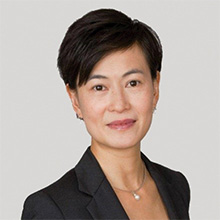
Vice-president and Head of Asset Allocation, NEI Investments
When markets are volatile, as they have been in 2025, investors often react in one of two ways, says Judith Chan, Vice-president, Head of Multi-asset Portfolios, with NEI Investments. For some, the first instinct is to cash out and hide until returns settle into what look like more predictable patterns. Others want to double down and ride the wave for as long as it lasts, sometimes putting long-term savings at risk.
The right approach is often somewhere in the middle. As advisors reach out to jittery clients in the coming months, one of the best ways to convince them to invest in a way that keeps them on track toward their financial goals may be to emphasize the value of carefully chosen partnerships with expert investment managers.
Chan leads the design, construction, and oversight of NEI’s multi-manager, multi-asset portfolios, so her work centres around partnerships with subadvisors selected because they’re best in class for specific mandates. The multilayered portfolio optimization process she oversees sets long-term capital market assumptions across asset classes, and then determines how to optimally deploy the subadvisors to capture market returns.
“It’s like cooking ingredients,” she says. “We need to understand the properties of our [subadvisor] managers in order to understand how to put the dish together. At the end of the day, it’s about the quality of the ingredients.”
NEI’s thoughtfully curated collection of subadvisors provides latitude to optimize qualities such as factor tilts to align with the firm’s top-down view of markets. In general, portfolios are optimized for the medium to long term by adjusting allocations to best suit the current market environment and business cycle stage.
What’s important in the current moment, says Chan, is to avoid the temptation to extrapolate from patterns that have worked for the past few decades. Instead, we need to shift with and adapt to the changing world order and examine markets and select investments through a completely new lens.
Navigating volatile, concentrated markets
One challenge to finding the right positioning for 2026 is the recent uneven market performance. For example, Chan points out that returns have been concentrated in gold in Canada, financials in Europe, and the Magnificent Seven in the United States. At the same time, market properties are diverging from economic properties, and it’s uncertain whether that disconnect will shrink or widen.
“We’ve had extraordinary returns in the past few years,” says Chan. “That may not be sustainable moving forward, but we still see tailwinds in the near term. Earnings are still strong, and the economy is still holding up.”
She adds, “We want to make sure we’re capturing that momentum. At the same time…we want to make sure we’re adding diversification where we need it to make sure we’re not overly exposed to any sectors, regions, individual names, or factor tilts.”
It’s important to seek out areas of the market where valuations aren’t as stretched, such as small to mid-cap stocks, Chan says, and gold also remains an important diversifier despite its rally. Overall, the NEI portfolios have been adding to mandates with relatively low correlations to the rest of the market.
The NEI Global Total Return Bond Fund, discussed in detail here, has been a valuable contributor over the past year while reducing overall portfolio volatility. Its global focus and ability to find opportunities through credit selection, duration positioning, and currency plays have added tremendous value amid the turbulence in fixed income yields and inflation. Also contributing has been the NEI ESG Canadian Enhanced Index Fund, a passive strategy with an ESG overlay that adjusts weightings based on the NEI team’s evaluation of ESG factors. Its broad exposure to the Canadian equity space captured returns objectively and effectively.
Cutting through headline clutter
“Some headlines are more bark than bite, but some headlines are actually very important. We need to decipher that,” says Chan.
In the context of changing market conditions, including the remapping of global trade routes, her team is keeping a close eye on inflation (which may contain opportunities if it surprises on the downside), AI investment in a multiyear build-out (which will result in winners and losers), and the renegotiation of the Canada-United States-Mexico Agreement (with the eventual legal framework much more important than head-of-state meetings).
“Another reason to be positive,” she says, “is the continued resilience of earnings in the 493 companies in the U.S. market,” which are the large-cap companies that make up the S&P 500 minus the Magnificent Seven. “The momentum of those companies remains strong…even as the growth rates of the top seven are coming back down to more sustainable levels. That is going to keep the index elevated — but they’re already significantly rich in valuation so nothing is cheap. There could also be risk.”
In 2026, as always, Chan sees an important opportunity for advisors to be proactive about contacting clients to give them perspective on the headlines — perspective informed by exceptional investment management partners.
“This is when you differentiate a good advisor from a great advisor,” she says.
Commissions, trailing commissions, management fees and expenses all may be associated with mutual fund investments. Please read the prospectus and/or Fund Facts before investing. Mutual funds are not guaranteed, their values change frequently and past performance may not be repeated. This material is for informational and educational purposes, and it is not intended to provide specific advice including, without limitation, investment, financial, tax or similar matters. The views expressed herein are subject to change without notice as markets change over time. Information herein is believed to be reliable, but NEI does not warrant its completeness or accuracy. Views expressed regarding a particular security, industry or market sector should not be considered an indication of trading intent of any funds managed by NEI Investments. Forward-looking statements are not guaranteed of future performance and risks and uncertainties often cause actual results to differ materially from forward-looking information or expectations. Do not place undue reliance on forward-looking information. Individual circumstances and current events are critical to sound investment planning; therefore, anyone wishing to act on this material should consult with their qualified advisor to obtain professional advice relevant to their specific situation.
NEI Investments is a registered trademark of Northwest & Ethical Investments L.P. (“NEI LP”). Northwest & Ethical Investments Inc. is the general partner of NEI LP and a wholly-owned subsidiary of Aviso Wealth Inc. (“Aviso”). Aviso is the sole limited partner of the NEI LP. Aviso is a wholly-owned subsidiary of Aviso Wealth LP, which in turn is owned 50% by Desjardins Financial Holding Inc. and 50% by a limited partnership owned by the five Provincial Credit Union Centrals and The CUMIS Group Limited.