

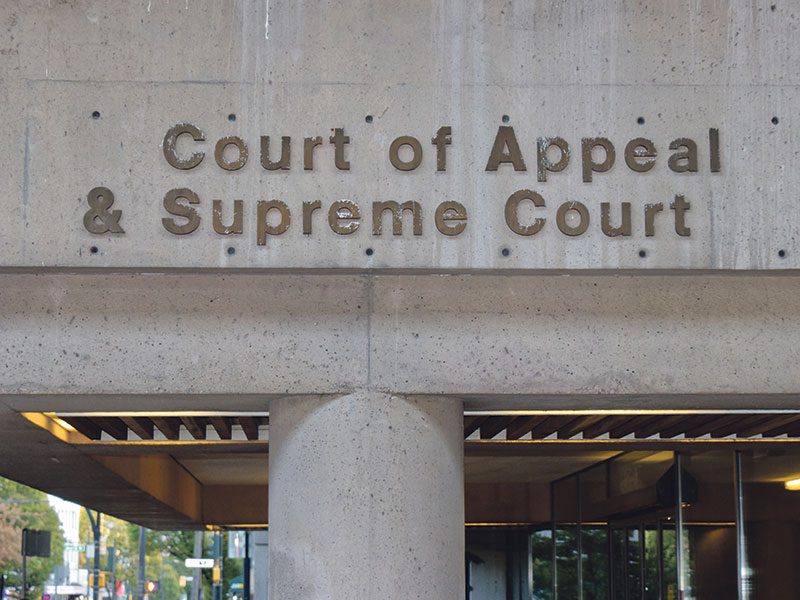
An investor who tried to sue her former discount broker, claiming that unauthorized trading took place in her account, had her claim dismissed by the Supreme Court of British Columbia. It found that she didn’t report the suspicious trades within the time required by her account agreement.
The court dismissed a claim against Scotia Capital Inc. brought by a former client of its online platform Scotia iTRADE. The claim alleged that there was unauthorized trading activity in her account, which resulted in losses.
According to the court’s decision, the investor, Pearl Cheng, opened her account in early 2022 . Between April and September that year, there were more than 500 trades in the account, including margin trades. She alleges that many of those trades weren’t authorized.
The court noted that Cheng, who was self-represented, claimed that while she hadn’t made many of the trades in her account, she couldn’t say which ones were authorized, or how to identify them.
A Scotia employee testified that its records show that all of the trades on the account were made using Cheng’s username and password.
While the investor argued that the use of the login credentials doesn’t reveal who actually accessed the account and entered the trades, the court said that from a legal perspective, that doesn’t matter. The terms of the account agreement, “place the responsibility upon Ms. Cheng to bring any unauthorized trades to Scotia Capital’s attention.”
The court ruled that the claims must be dismissed because, “they are precluded by the account agreement and Ms. Cheng’s failure to raise concerns in relation to unauthorized trades within 30 days.”
As for her arguments that the firm, “failed to explain the risks, ensure suitability or obtain [her] informed consent,” the court also dismissed those claims on the basis that discount brokers are prohibited from providing investment advice or recommendations, and from ensuring suitability.
“In my view, Ms. Cheng’s claims in negligence and fiduciary duty cannot succeed in the face of these contractual provisions,” the court said. “Scotia Capital owed no duty to Ms. Cheng to explain the risks of her online trading, to ensure that her trades were suitable for her, or to obtain her informed consent to transactions on her account.”
As a result, it dismissed her claim.