
Canada has the potential to bolster Europe’s energy security through a new alliance, but experts say it doesn’t necessarily mean tankers crossing the Atlantic Ocean laden with oil or liquefied natural gas.
Prime Minister Mark Carney was in Strasbourg, France, this week where he and European Union leadership discussed strengthening ties on several fronts amid strained relations with the United States.
“Europe is in a precarious situation on multiple fronts,” said Werner Antweiler, an economist at the University of British Columbia.
The European Union has historically relied on Russian energy imports, but pivoted to other sources following that country’s invasion of Ukraine in 2022. Middle Eastern supplies filled some of that gap until the United States and Israel launched their war against Iran in February, crimping shipments out of the Persian Gulf. The United States itself is a major exporter of LNG to Europe, but U.S. President Donald Trump has thrown global trade into disarray.
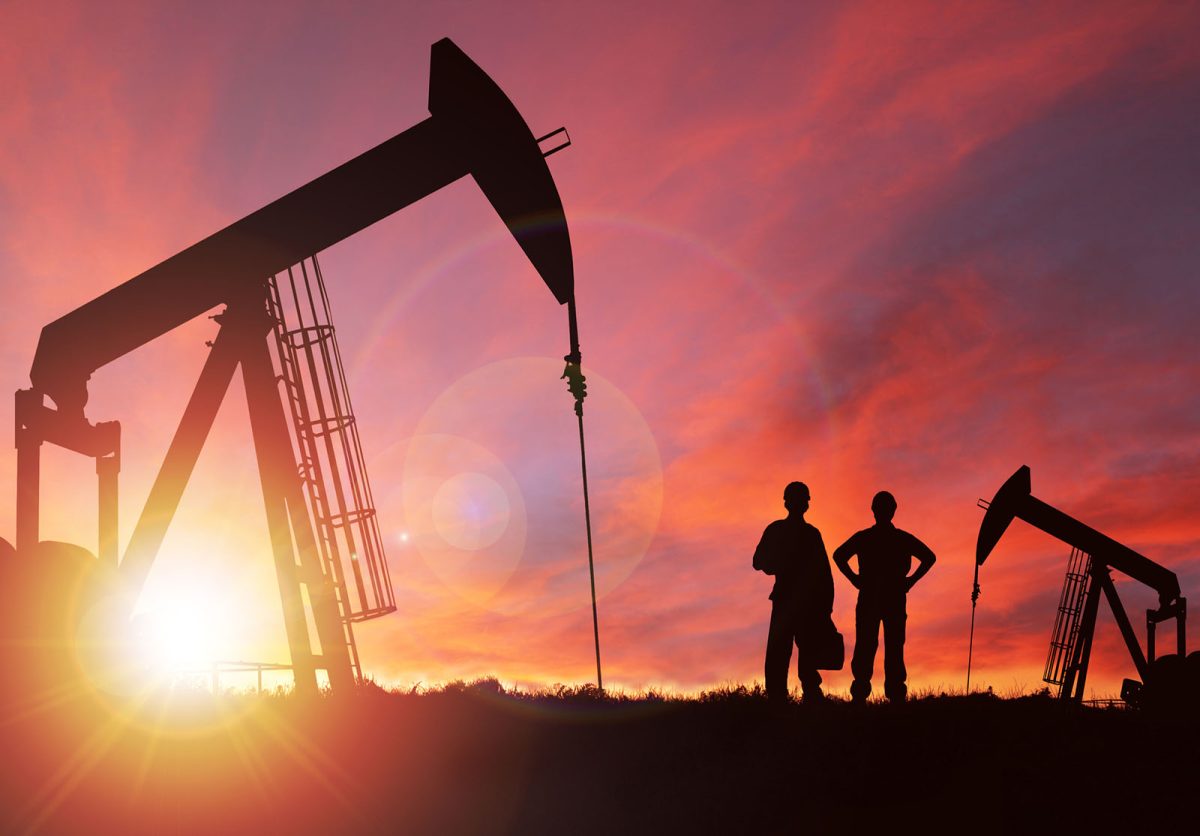
Canada has pipelines and port infrastructure to export oil and gas from the West Coast to Asia. Not so in the East.
“There’s nothing imminent in the short-term that’s ready to physically take the oil and gas easily off the East Coast to Europe,” said R.J. Johnston, director of energy and natural resources policy at the University of Calgary’s School of Public Policy.
“No doubt that will take time, even with the new regulatory guidelines and additional public-sector support that seems to be available for those projects.”
There are options in the meantime, though.
European companies have the ability to secure a stable gas supply from Canada through what’s known as swap contracts, where a cargo headed from British Columbia to Asia, for instance, could be traded with another one half a world away. Earlier this year, two German companies signed agreements to buy liquefied natural gas from the Ksi Lisims LNG plant planned for the northern B.C. coast.
“The players that have been investing in LNG out there are really more trading oriented, so they can pursue things like swaps and moving cargoes between the Atlantic and the Pacific basins within their larger portfolio,” Johnston said.
Dynamics in the oil market are different, but Antweiler said there could be a more general “reshuffling” of supply: Canada adding to the broader market, freeing up barrels for Europe that meet its stringent environmental standards.
This summer, Alberta Premier Danielle Smith and Ontario Premier Doug Ford floated a plan called the Northern Shield Energy Corridor to ship Alberta crude to refineries Sarnia, Ont., with the potential of opening up new export paths via the Atlantic.
Antweiler does not see the European situation being much of a boost for that concept.
“European demand alone will not see such a project come to fruition,” he said, calling it “a value proposition to all of Eastern Canada that’s still relying on U.S. and other imports.”
Johnston said it’s unclear whether a European player would want to commit to a project that would take tens of billions of dollars to build and take years to complete.
He said Asia remains the more promising avenue for Canada to diversify its exports.
“We do have existing oil and gas infrastructure and exports to Asia. There’s more coming, and the demand signal in Asia is much more clear,” he said.
Both Europe and Asia want to find more reliable sources to meet their current needs, but Johnston said the growth projections for Europe are much softer.
There are other avenues for Canada to boost its energy trade with Europe beyond fossil fuels.
Antweiler said biofuels and hydrogen could be promising as Europe prioritizes low-carbon fuels. With the European Union’s ability to enrich uranium, Johnston cites Canada’s abundance of that raw resource as another opportunity to supplant Russian imports.
With the European Union’s ambition to become the world’s “electro-powered continent” — increasing its energy consumption to 46% electric from 23 per cent by 2040 — critical minerals are also bound to play a major role.
A report last month from Clean Energy Canada laid out how Canada can seize that opportunity. Among other things, it recommended that Canada focus on trade in six minerals that are most crucial to electrification: cobalt, copper, graphite, lithium, nickel and rare earth elements.
“Critical minerals are really the new oil in this economy that’s emerging, which will be largely electrified,” said Rachel Doran, executive director of Clean Energy Canada.
Europe aims to produce just 10% of the minerals it needs domestically, relying heavily on exports. Canada has made some headway in tapping that market, Doran said, but more needs to be done to sew up firm financing, offtake and investment agreements.
“The electrification economy is still something that we’re shifting towards. And maybe in North America, we see this as further off than in some other places globally where that transformation is a bit further advanced and people are seeing it in their day-to-day lives,” Doran said.
“I think it’s easy to maybe bet on what you know. … We really need to keep an eye on the prize: where those countries are going and the kinds of materials they’re going to want from us.”