

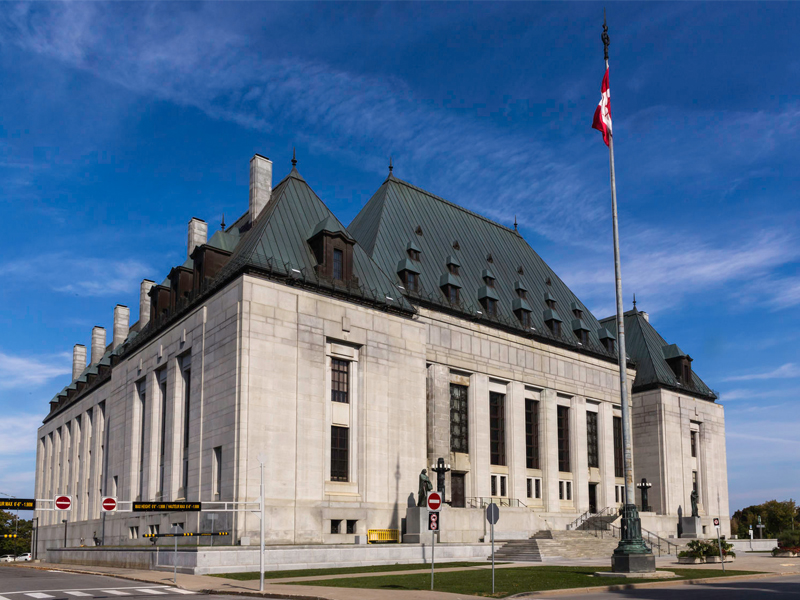
The Supreme Court of Canada has upheld an appeal brought by SS&C Technologies Canada Corp. in a legal dispute with Bank of New York Mellon Corp. (BNY) over the improper sharing of the market data that the bank purchased from SS&C. In a decision released on Friday, the court found that a lower court judge failed to consider the impact of evidence that was intentionally destroyed, hampering the proper calculation of damages, and ordered a new hearing on damages.
The case stemmed from SS&C’s discovery in 2016 that BNY was sharing the securities valuation data that it had been purchasing from SS&C since 1999 with various affiliates, in violation of the contract between the firms.
In 2021, the Ontario Superior Court of Justice ruled that BNY had breached their contract. That decision was upheld on appeal, but the Court of Appeal for Ontario ruled that SS&C was entitled to just US$5.7 million in damages, setting aside an additional $922,887 that was awarded in the lower court.
SS&C appealed, arguing that it was entitled to US$150 million in damages, plus interest and costs, and that the appeal court erred in calculating the damages in the case, in part, because the bank had destroyed evidence that would have informed those calculations.
In a unanimous decision, the Supreme Court agreed with SS&C, ruling that the Ontario Court of Appeal didn’t properly consider the impact of the destruction of evidence when assessing damages — a phenomenon known as spoliation, which the Supreme Court hadn’t considered since a decision from 1896.
Back then, spoilation involved the destruction of physical documentation, the court noted — but “in the digital age, spoliation is far more inconspicuous, occurring instantaneously at the click of a button,” it said.
In this case, the Supreme Court said it agreed with the appeal court’s finding that BNY engaged in spoilation, but it found that the judge then “made errors of law and committed palpable and overriding errors in his assessment of damages that this court cannot uphold.”
Among other things, it found that “the trial judge failed to consider the scope and impact of the destroyed evidence.”
When there has been spoliation, “courts must level the playing field,” the decision said. “The absence of this evidence cannot accrue to the benefit of the party that flouts the administration of justice.”
However, in this case, the appeal court failed to level the playing field, the Supreme Court said.
According to the Supreme Court’s decision, the appeal court used an approach to assessing damages that failed to account for the number of affiliates that may have received SS&C’s data, and the number times that data was improperly shared.
“In light of the cumulative impact of the trial judge’s errors, we would allow the appeal,” the Supreme Court said.
“There is no doubt that SS&C should be compensated for the proprietary data that BNY wrongly shared with up to 65 unauthorized entities over 17 years, contrary to the express contractual agreement between the parties,” it ruled. “Therefore, we are of the view that a new hearing is required on the specific issue of the quantification of the damages owed to SS&C.”