

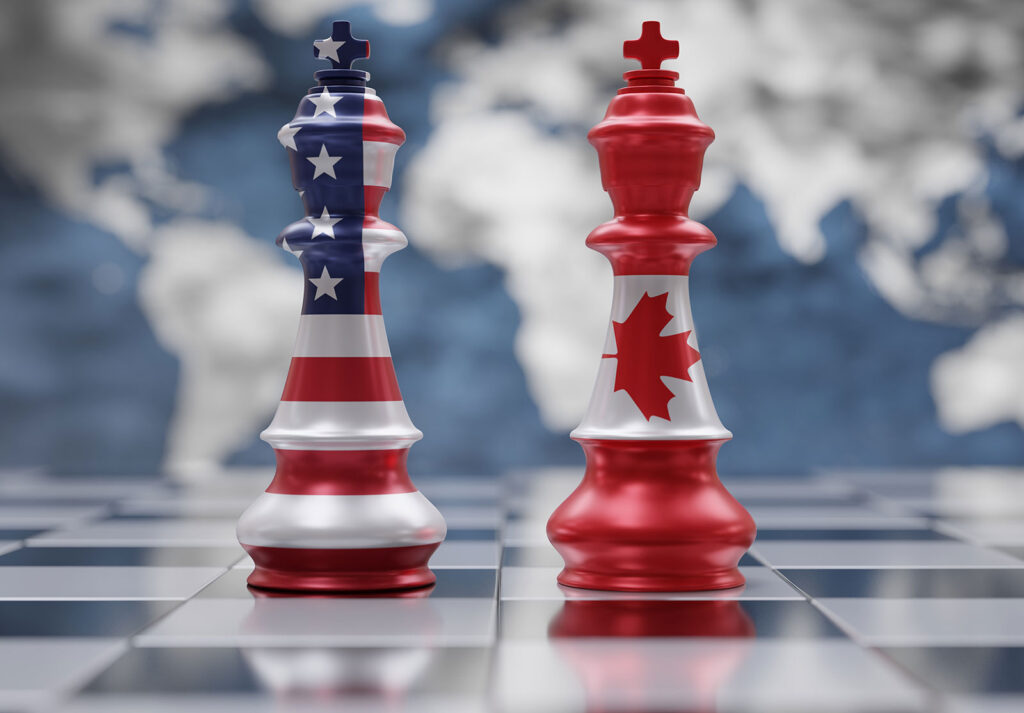
The ruling party typically loses seats in U.S. mid-term elections, but even if the Republicans surrender control of Congress in the upcoming midterms that won’t necessarily spell the end of trade conflict between Canada and the U.S., says National Bank Financial Inc. (NBF) in a new report.
As it stands, the Republicans, which control both the House and the Senate, stand to cede ground in the midterms, the report said.
To start, the president’s party has lost seats in the lower chamber in 14 of the last 16 midterm elections, and it has lost seats in the Senate in nine of those elections, it noted.
“Historically, voters who oppose the sitting president have been more motivated to vote,” the report said.
And, this time around, the “current political environment favours the Democrats,” the report added.
“High inflation, rising gasoline and food prices, an unpopular war with Iran, the President’s low approval ratings and the Democrats’ roughly seven-to eight-point lead in the generic congressional ballot all point to Democratic gains in the midterms,” it noted.
Yet, even if the Democrats gain power in Congress, this doesn’t mean the end of trade hostilities is imminent, the report cautioned.
“Because much of President Trump’s trade agenda has been conducted by way of executive authority, losing control of both chambers would not necessarily prevent him from imposing additional tariffs or other trade restrictions,” it said.
While a Democrat-controlled Congress could pass legislation that aims to constrain trade policy, it would require two-thirds support in both levels of Congress to overcome the presidential veto, the report said.
“However, a severe Republican defeat, combined with continued inflation, elevated bond yields, dissatisfaction among Trump supporters and opposition to the war in Iran, could increase pressure on the White House to reach a trade agreement with Canada,” it suggested — adding that this pressure could intensify amid strong public opposition to the current trade conflict with Canada.
Looking further down the road, “policy uncertainty is set to rise as attention turns to the priorities of the next presidential administration,” NBF noted.
“Key questions will include the extent to which Washington’s more inward-looking approach to trade policy will endure; how the next administration will reconcile its campaign promises with high public debt and borrowing costs; what direction AI regulation and energy policy will take; and how it will manage the geopolitical, supply chain, and energy market consequences of the conflicts in Iran and Ukraine,” the report said.