

Funds
- Canada Life International Concentrated Equity Fund - mutual fund
- International Concentrated Equity: segregated Fund
Fonds
(Runtime: 5:00. Read the audio transcript.)
**
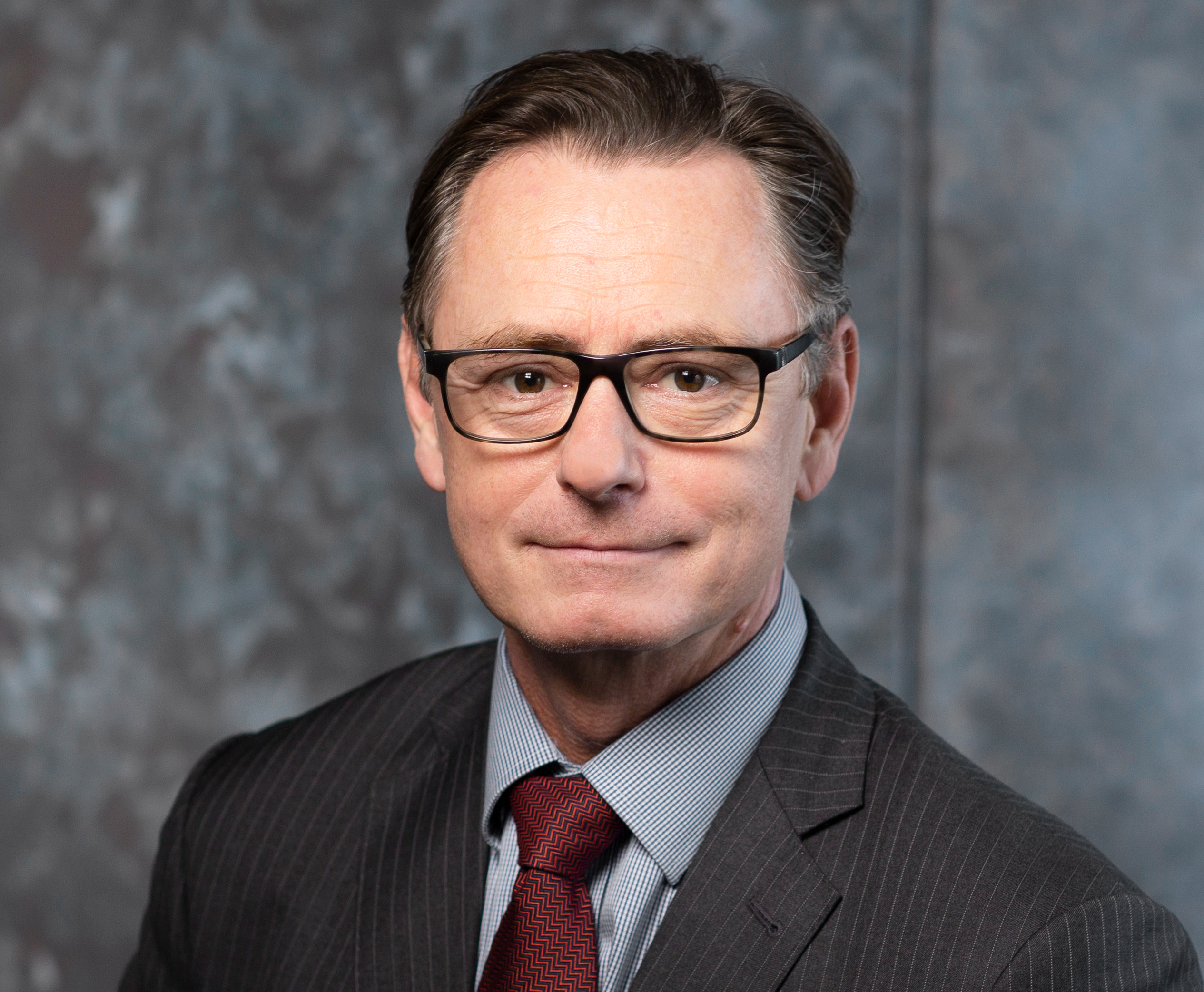
Donald Trump’s redrawing of geopolitical relationships opens new investment opportunities in the European defence sector, says Morten Springborg, global thematic specialist at C WorldWide Asset Management.
Speaking on the Soundbites podcast this week, Springborg said the U.S. President’s “upending of the world order” will likely accelerate a shift in European industrial resources away from the auto industry and into common defence.
“Rheinmetall, an arms procurement company in Europe, is actually actively hiring people from the auto industry, because the auto industry is slowly dying in Europe, but there is ample demand for the labour,” he said.
“Exports that [were] previously going from auto manufacturers in Germany to the U.S., those capacities — that capital and that labour — will now be redirected into defence in Europe.”
Indeed, incoming German chancellor Friedrich Merz has indicated he is determined to recreate the defensive capabilities of Germany and Europe, independent of the U.S.
“That is completely new talk from a European leader,” he said. “And I think that’s a good thing. In Europe, I think it’s a very, very important and necessary wake-up call. We have been too comfortable, living in a period where we have outsourced our security system to the Americans.”
Still, the recent U.S. decision to stand with countries like Russia and North Korea in opposing a United Nations declaration of support for Ukraine was a shock.
“I think we will come back to this day as a day of infamy,” he said. “This is, I think, the day when we concluded that what the Trump administration is doing is not negotiating tactics. It’s not ‘the art of the deal’ but it’s a breakage with the historical alliance structures that we’ve had across the Atlantic since 1949.”
He said “the end of Pax Americana as we know it” will create a lot of investment opportunities in Europe, particularly in what he describes as “intelligent tangible assets” like artificial intelligence-infused industrial machinery.
“We could talk about companies like [France-based] Schneider Electric SE or [Sweden-based] Atlas Copco, or [German-based] Siemens AG, but we have competent clusters in Europe focused on capital goods going from Finland to Sweden to Germany to France into Italy,” he said. “They have for 100 years actually been world leaders in producing machinery for the global manufacturing industry.”
He said the overconcentration of equity value in the U.S. is unsustainable.
“Today the U.S. is 70% of global equity markets and I find it very difficult to see that that should also be the case in five years’ time,” he said. “For different reasons, I believe that Europe is going to grow faster.”
He said Trump has ushered in an era of recalibrated trade, where international relationships are largely transactional.
The Trump view of tariffs, he said, appears to be based largely on a thesis by Stephen Miran, a Treasury Department economic policy advisor in the first Trump term, and Trump’s nominee for chairman of the White House Council of Economic Advisers.
Miran’s report, A User’s Guide to Restructuring the Global Trading System, details the cost to the U.S. of having the world’s premier reserve currency — one that is structurally overvalued. Tariffs are the first step in correcting the imbalance.
“And they don’t discriminate between allies and non-allies. They look at who is ‘taking advantage’ of [the] U.S. as they see it,” he said.
Ultimately, he said, the policy will cause global economic uncertainty and likely be a detriment to U.S. growth in the short term.
“It’s the unpredictability of the situation that is a problem,” he said. “Actually, I think it’s the core tenet of the policy agenda of Trump to infuse uncertainty. I think he feels that he can take advantage of people if there is uncertainty about his motives and his directions. But if it continues for a long time, it’s going to have significant impact on aggregate growth in the world economy.”
The lesson from the current global economic disruption, he said, is that equity investors should consider diversification geographically.
“There are many, many interesting opportunities outside of the U.S. The U.S. being 70% of the world equity markets is unsustainable, if you ask me,” he said, adding that there are pockets of growth where companies will be able to generate returns.
“It’s going to be a volatile period we are going to go through. But at the end of the day, earnings growth drives share prices.”
**
This article is part of the Soundbites program, sponsored by Canada Life. The article was written without sponsor input.