
Government bond yields have been moving higher since the spring, when the Iran conflict restarted inflation concerns. In the last two weeks, we’ve seen an increasingly global selloff that has rattled investors.
The latest round of worry intensified August 28. Speaking from Jackson Hole, Federal Reserve Chair Kevin Warsh stopped short of saying the U.S. central bank would raise interest rates. But he did say that inflation is the Fed’s key concern.
“We must be confident that underlying inflation is moving to our objective, clearly and at sufficient speed,” Warsh told reporters. “Otherwise, we have work to do.” He went on to make clear that 2% is still his inflation target.
Three days later, renewed fighting in Iran pushed Brent crude back up over US$90 a barrel. The yield on the U.S. 10-year Treasury climbed above 4.75%.
This week, the selloff broadened. Government bond yields in the U.S., Japan, Germany and the U.K. hit multi-year highs. Japan’s 10-year JGB rose to 3%, a level not seen since 1996.
More than inflation
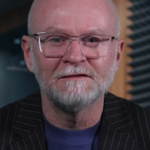
But while inflation is undoubtedly a factor, it’s not the only thing driving up U.S. government bond yields. David-Alexandre Brassard, chief economist at the Chartered Professional Accountants of Canada, said in an interview Thursday that two additional issues are key to understanding what’s happening.
The first is relatively minor. AI hyperscalers have turned to debt markets for capital to fund their infrastructure build. Collectively, Alphabet, Amazon, Meta, Microsoft and Oracle have issued about US$220 billion in corporate bonds so far this year. If you include data centre operators and other AI-related companies, that number looks more like US$308 billion as of the end of July. That level of issuance adds materially to the competition for capital.
“Whenever you’re fighting for capital,” he said, “what you have to give investors has got to be better.”
The bigger concern, Brassard said, is the U.S. government’s own demand for capital.
“Fiscal outlook is where we need to look … bringing the financial house into order,” Brassard warned.
Investors have begun to demand higher compensation for lending to a U.S. government running outsized deficits at the same time its debt burden is historically high.
“There doesn’t seem to be fiscal discipline in the Congress or in the White House,” Brassard said. “Right now, the U.S. is running deficits that are between 5.5% and 6.5% of GDP.”
Federal debt held by the public equalled 98.7% of GDP in the latest quarter. The Congressional Budget Office projects it will reach 101% in fiscal 2026 and 120% by 2036. That would break the previous record of 106%, set following after the Second World War.
As recently as the second quarter of 2008, debt held by the public equalled 35.6% of GDP.
“If you look at the U.S. right now without any biases, it’s hard to find a party that’s fiscally responsible,” Brassard said. “It’s hard to be optimistic.”
The prioritization of tax cuts, long a mantra in U.S. politics, is central to the problem.
“Look at the percentage of GDP that they’re taking into revenues, it’s much lower than other developed countries,” Brassard said. “They’ve systematically made the choice not to do it. … When does that end?”
To be clear, Brassard is not predicting a fiscal crisis. “I think the outlook is probably not as shaky as it looks right now,” Brassard said. “But depending on what happens on the tariff front, fall is more volatile than we would like.”
Still, all of this bears watching. If borrowing costs continue to rise while the Strait of Hormuz remains closed and U.S. tariffs push prices upward, Washington could face an uncomfortable combination of higher inflation, rising interest costs and diminishing fiscal room to manoeuvre.