

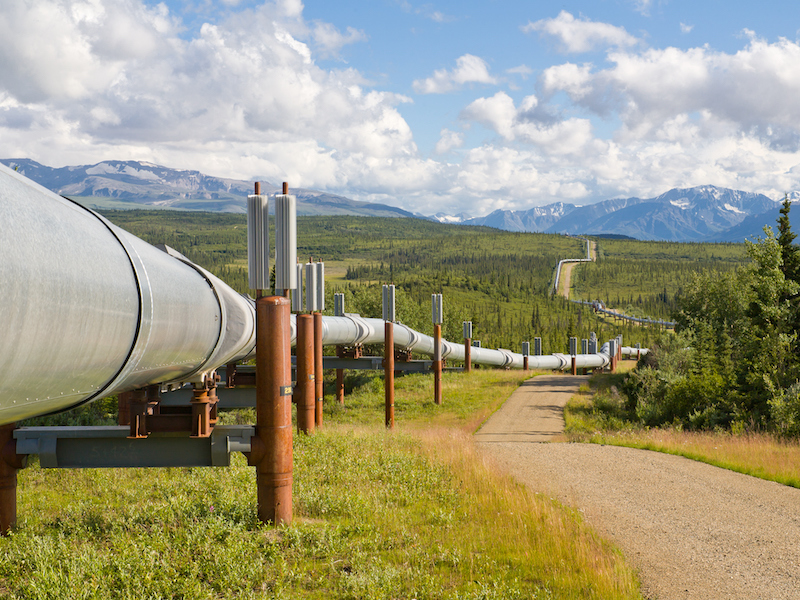
Welcome to Soundbites, weekly insights on market trends and investment strategies, brought to you by Investment Executive and powered by Canada Life. For today’s Soundbites, we’re talking about Canadian crude oil in a time of geopolitical turbulence with Jeff Bradacs, co-head of equity strategies and head of portfolio management and trading with Picton Investments. We talked about where he’s finding opportunity, how he’s positioning Canadian energy in his portfolios, and we started by asking how war in the Middle East is changing the outlook for Canadian oil.
Jeff Bradacs (JB): The recent geopolitical events are a reminder for investors that the world remains highly dependent on hydrocarbons. There’s a lot of talk over the last few years of growth of renewables or alternatives. But still, the primary field there for the global economy is both oil and natural gas. And when you look at the Middle East, it’s reinforced how important those molecules are, particularly when 20% of global oil consumption moves through the Strait of Hormuz. And for Canada, it also highlights one of our greatest strengths. We’re one of the largest hydrocarbon resource bases in the world, measured in decades of reserves. We operate, also, in a very stable jurisdiction, which has been important in this backdrop. And energy companies have been some of the most disciplined allocators of capital globally. The discount on Canadian energy has not disappeared but it has improved over recent years. And a lot of that is about egress — the ability to get our molecules beyond our borders. In the last few years, we’ve had TMX on the oil side. That’s helped narrow a bit of the heavy discount on our crude. And more recently, we’ve had the LNG exports, which helped narrow that gap on some of the gas molecules. And, just for context on natural gas, we have a massive resource, but there’s times we produce so much that we can’t absorb it in our market. And so we get depressed local pricing, where many other regions around the world would welcome access to our supply.
Canada’s oil position
JB: In the near term, it’s still largely about the molecules. The oil and natural gas is the story. Commodity prices remain the biggest driver of earnings, cash flow, investor sentiment in the oil and gas space in Canada. I think longer term, there is an opportunity on infrastructure and market access, given we have these massive 30 to 50 years of resources. And so, the real question is how do we monetize those resources? Infrastructure projects take time. These aren’t one-year, two-year projects. They’re multi-year projects with massive capital. So, they require commitments and insurance that the government supports these buildouts. Ideally, we should not only be benefiting from upstream production, but also expanding midstream infrastructure, LNG exports, also things like petrochemicals or methanol, and other downstream industries that can leverage low-cost feedstock of molecules. And so, the resource base is here. The long-term value creation opportunity comes from building that infrastructure and industrial ecosystem to maximize that advantage we have here in Canada.
Compelling opportunities
JB: Geopolitical events have highlighted the importance of energy security and the importance of hydrocarbons. And I think that does play into a lot of opportunities in Canada with those long-life assets that can supply resources, not just for today but for the next decades. Interestingly, I would say investors have looked very short term. They tend to look at this year’s multiple of cash flow. And the problem is two companies can trade at the same multiple but have dramatically different asset qualities. If you take producers in the U.S., for example, they produce but they have a treadmill, meaning they’re declining every year 30% of their production. And so, it requires a constant focus of capital spending. When you look at our oilsands companies, you have 30 to 50 years of resource and you have a much lower decline rate. You have a roughly around a 10% decline rate. And so, it really advantages those companies. They’ve sunk those capitals on those big asset projects — companies like Suncor and Synovus — and that allows a lot more free cash for them to bring back to shareholders, optimize and add some growth and, we think, exhibit positive change. So, I think that’s one of the underappreciated advantages in Canada. We don’t have those steep decline curves. The other areas we like are the companies that can take those molecules out of Canada and benefit from the low cost here to get higher prices outside. And one of those companies in the midstream space would be Alta Gas. That’s taking areas like propane — where we have an abundance of propane — liquefying it, bringing it to port, and then shipping that over to Asia, and receiving much higher pricing.
Cash flow versus reinvestments
JB: Dependence on oil and gas is going to be here for decades to come. I think when you look at it, it’s also important to look at the capital discipline of oil and gas companies. You know, management teams from the last cycle have very much focused in on capital discipline. And so, when you’re seeing higher oil prices, you’re not seeing them put that back into spending on growth. Instead, they’re very much focused on capital discipline. Taking that free cash flow, deleveraging, so leverage is much lower this cycle than past cycles. And then the growth we’re seeing from the big producers is what I would call half cycle. More de-bottlenecking growth. Very high return growth for shareholders. And so, I think it is very different than other cycles. Usually, when prices go higher, you start to see people put their foot on the accelerator, adding production. Because of capital discipline, because of the last cycle, you’re seeing much more discipline from producers.
Where energy sits in a balanced portfolio
JB: I think there’s an element of cyclicality, where some may play tactically. But stepping back, we’ve clearly had a change in inflation regime the last few years, where inflation is more volatile. We’re not in that period of low persistent inflation which we had for 20 years. We’re in a different era. And when you have inflation in a portfolio, one of the hedges against that is having some resources, whether that’s energy or other commodities, base metals for example. They serve as nice diversifiers in portfolios, especially in inflation shocks. And energy has probably been one of the key ones there as a nice hedge against inflation shocks. And so, as clients think about building portfolios, energy has a position in this cycle to get returns, but also provide a nice inflation hedge given the threat of higher inflation.
And finally, what’s the bottom line on investing in Canadian energy in the current moment?
JB: I’d highlight the importance of hydrocarbons for the global economy. And given that we have some of the largest reserves in the world, most secure, very stable jurisdiction, Canada offers exposure to some attractive opportunities in the energy space.
Well, those are today’s Soundbites, brought to you by Investment Executive and powered by Canada Life. Our thanks again to Jeff Bradacs of Picton Investments. Visit us at investmentexecutive.com, where you can sign up for our a.m. newsletter and never miss another Soundbite. Thanks for listening.
**
Go back to the article.